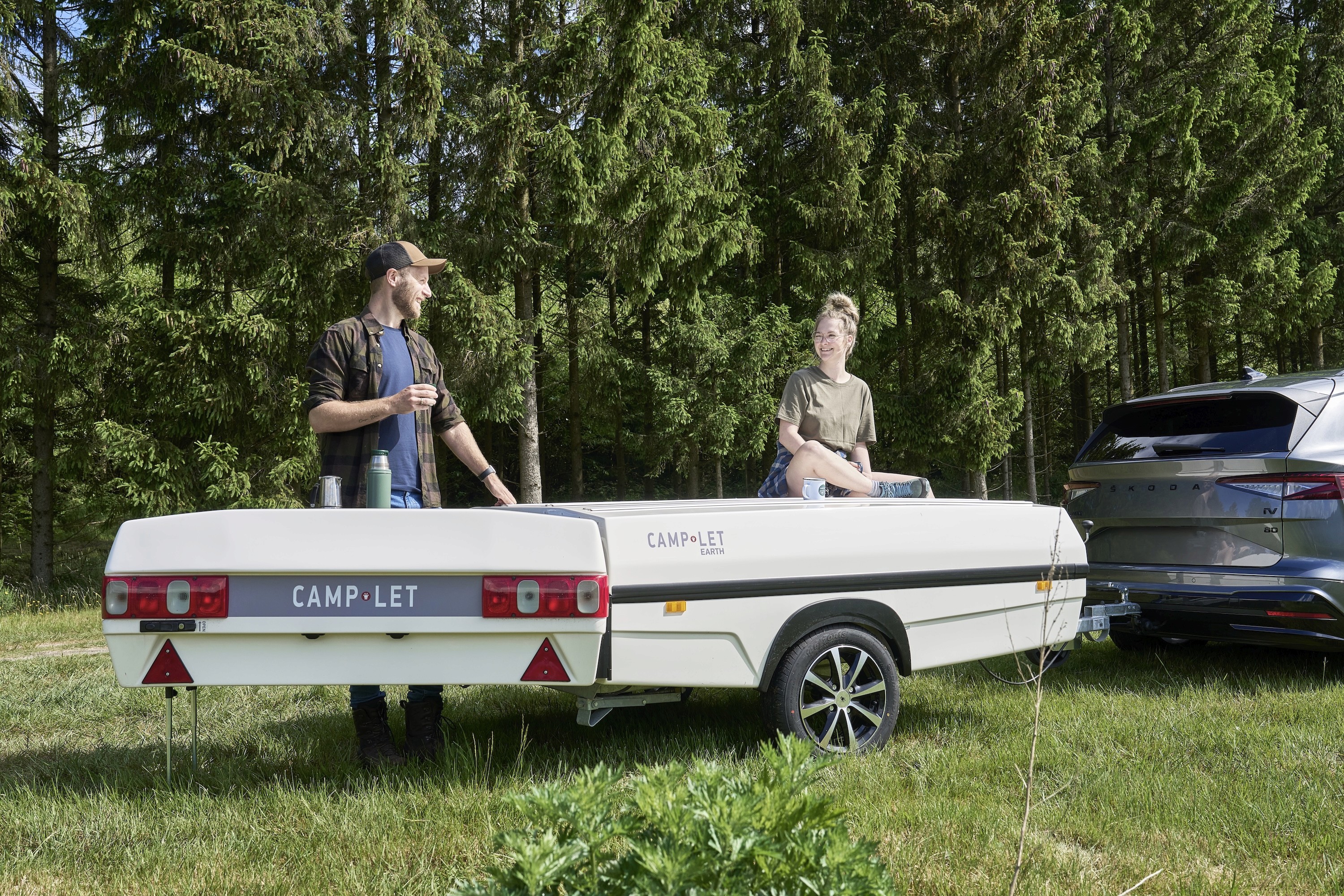
A Camp-let Earth is a canvas camper. In bear country that puts it in the same class as a tent, and a few campgrounds will not let it in at all. Here is how to check before you book, where the rules bite, and how to run your camp so a bear has no reason to visit.
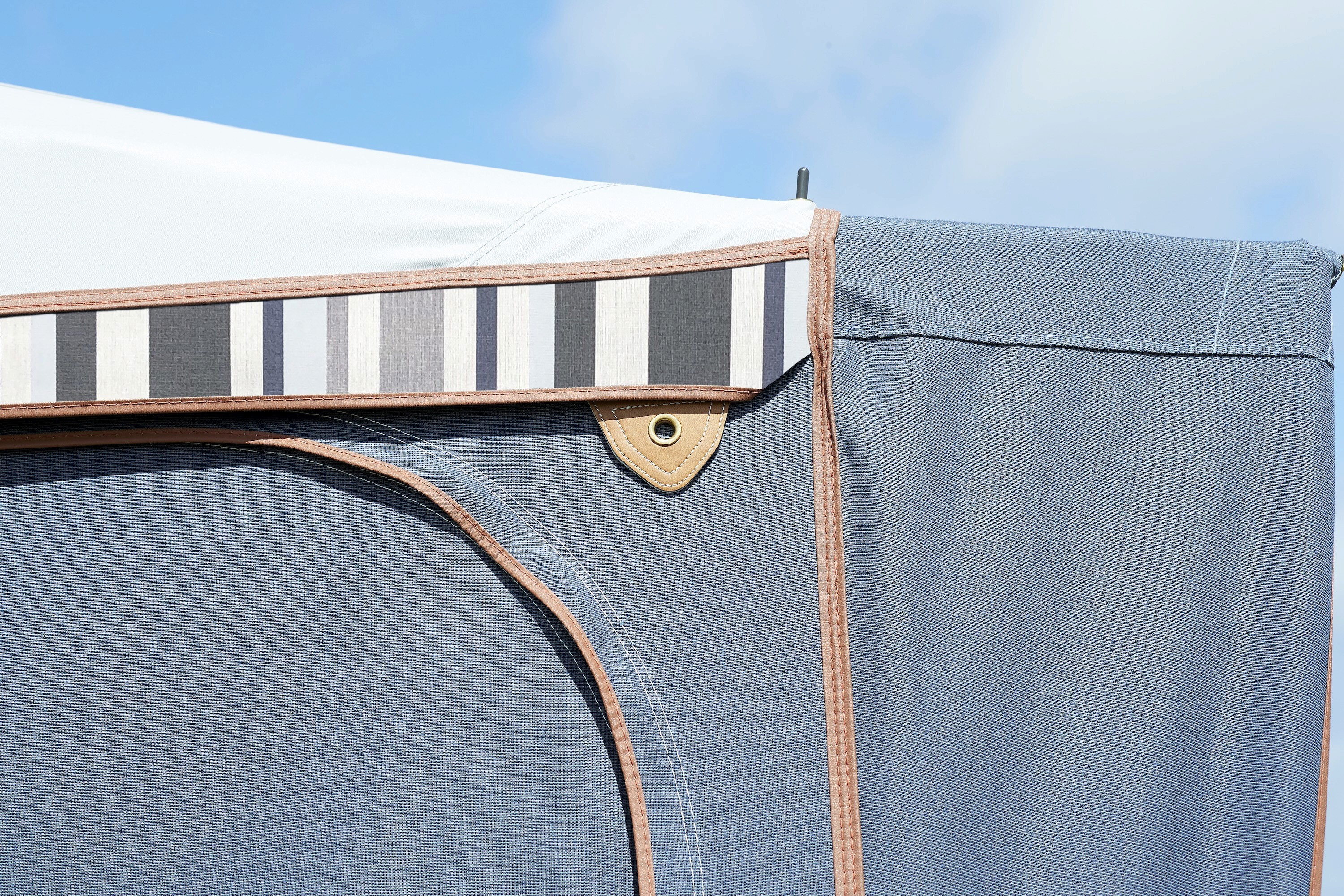
Start with the honest part. Park rules do not care how well a trailer is built. They sort camping units into hard-sided and soft-sided, and a Camp-let, with canvas walls and canvas over the beds, is soft-sided. Where a campground restricts soft-sided units because of bears, that restriction applies to a Camp-let exactly as it applies to a tent or a pop-up.
Where the Rules Bite
Three kinds of restriction exist, and each is checkable before you book. The three campgrounds below are examples, not a list; the same rules appear at national forest and state park campgrounds across bear country, and the only list that matters is the one for the campground you are booking. The first kind is permanent. Fishing Bridge RV Park in Yellowstone is hard-sided only, “no tents or campers with tent-style slideouts,” because it sits in bear habitat. Yellowstone’s other campgrounds take tents and therefore take a Camp-let. The second kind is structural. Banff’s Lake Louise Campground has a hard-sided section and a separate section for “tents, tent-trailers, and units with soft-sided pop-outs” that is enclosed by an electric fence; book the right section. The third kind is temporary. Glacier National Park has closed Many Glacier, St. Mary, and Rising Sun to soft-sided camping for days or weeks at a time when a food-conditioned bear is working a campground, then reopened them. A reservation does not protect you from that; a call to the campground the day before does.
Two habits cover all three. When you book, read the campground page for the words “hard-sided” and “soft-sided” and treat a Camp-let as soft-sided without arguing the point. The test is simple: take every precaution you would take with a tent, and if a campground would not take a tent that night, assume it will not take a Camp-let. The week of the trip, check the park’s current conditions page or call. If a campground has gone hard-sided only, ask which nearby ones have not.
Food Storage: The Camp-let Is Not the Safe
Every bear-country campground runs the same rule, written slightly differently. Grand Teton’s version: when not in use, store odorous items in a “bear-resistant food storage locker or a hard-sided vehicle,” doors locked and windows closed, and “never store any of these items in tents, sleeping bags, or soft-sided vehicles.” The list of odorous items is longer than most people expect: food and drinks including empty containers, trash, coolers and ice chests, clean or dirty cookware, stoves, and grills, toiletries, fuel, bug spray, sunscreen, and pet food and bowls.
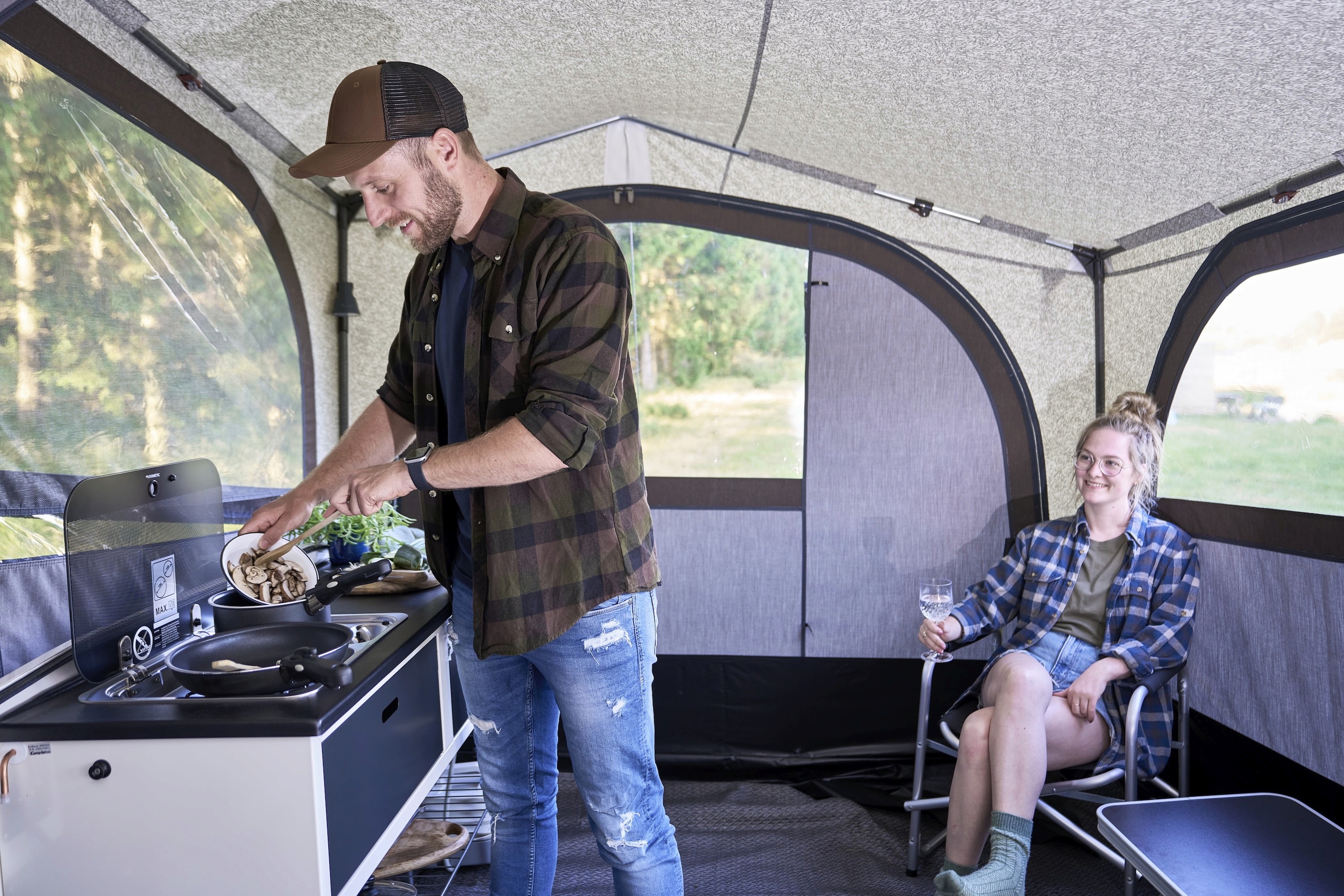
Apply that to a Camp-let and the plan writes itself. The kitchen is part of the trailer, so cook, eat, and clean up, then wipe it down and move every attractant into the tow vehicle or the campground locker before you leave camp and before you sleep. The cooler lives in the car, not under the awning. Toiletries and the dog’s bowl go with it. The Camp-let holds the beds and the bedding and nothing that smells, which is the same discipline a tent camper keeps, with more room to keep it.
What a Camp-let Does Give You
Two things a tent does not. The sleeping area is off the ground and separated from the kitchen by design, so cooking smells do not settle into the bedding the way they do in a tent you cook beside. And packing the kitchen and food away takes a few minutes, because the trailer is built around doing exactly that every morning. Neither makes a Camp-let hard-sided. Both make the storage rules easier to follow than they are in a tent.
Before You Book
Read the campground page for “hard-sided only” and “soft-sided” wording. A Camp-let is soft-sided.
At parks with mixed sections, such as Lake Louise, book the soft-sided section.
Check the park’s current conditions page or call the week of the trip. Temporary closures are not reflected in a reservation made months earlier.
Plan to store every odorous item in the tow vehicle or the locker. Pack a bin for it so the morning move is one trip.
If you are deciding between a Camp-let and a hard-sided trailer because of where you camp, Camp-let Earth vs. Small Travel Trailers treats the question honestly, and Camp-let Earth vs. Rooftop Tents covers the other soft-sided option. If you have a specific park or campground in mind and are not sure how it classifies a Camp-let, contact us and we will look it up with you.