Most van and RV accessories work the same way. They arrive. You set them up next to your vehicle. Then you spend an hour figuring out how to keep them from blowing over. The keder rail system works differently. It connects your awning accessory directly to your existing awning. The connection is mechanical. The result is a room that holds its position in wind, does not require separate guying from scratch, and sets up the same way every time. Understanding how this system works will help you choose the right Isabella product for your setup, and understand why more Isabella products will be built around it as our U.S. range grows.
What a Keder Rail Is
A keder rail is a narrow channel that runs along the outer edge of a roll-out canopy cassette. It is usually aluminum or plastic-clad aluminum. The channel faces outward on the outer part of your roll-out canopy.
Most people have never looked at this part of their awning closely. That is normal. The keder rail is not designed to be noticed. It is designed to be used.
The rail accepts a specific type of rope or beading, called a keder beading. When you thread a keder beading into the channel and slide it along, it locks in place under tension. This is the same mechanical principle used in sailboat sails, truck tarps, and large commercial tents.
Your awning already has this rail. It came with it.
Why This Matters for Isabella Products
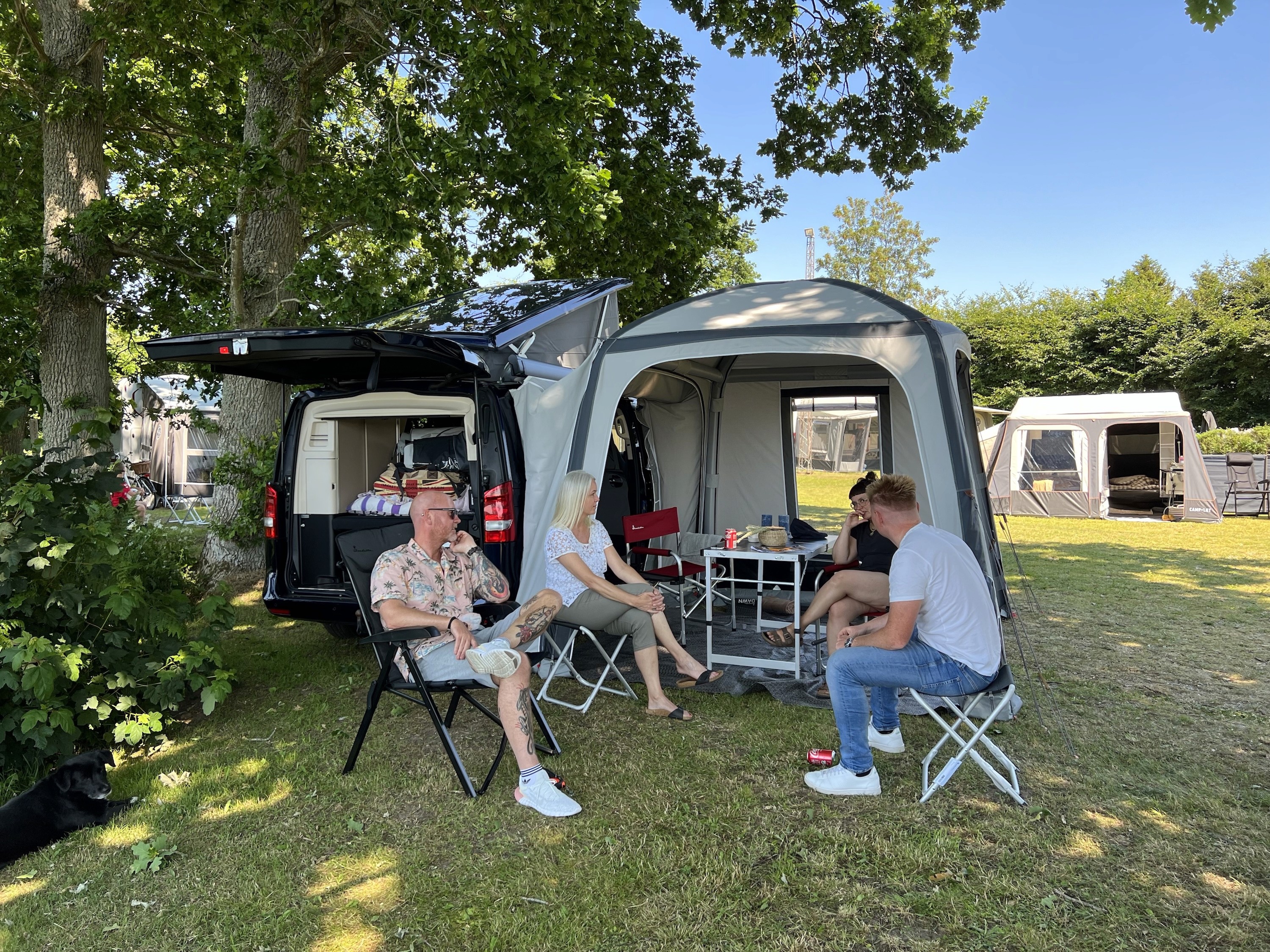
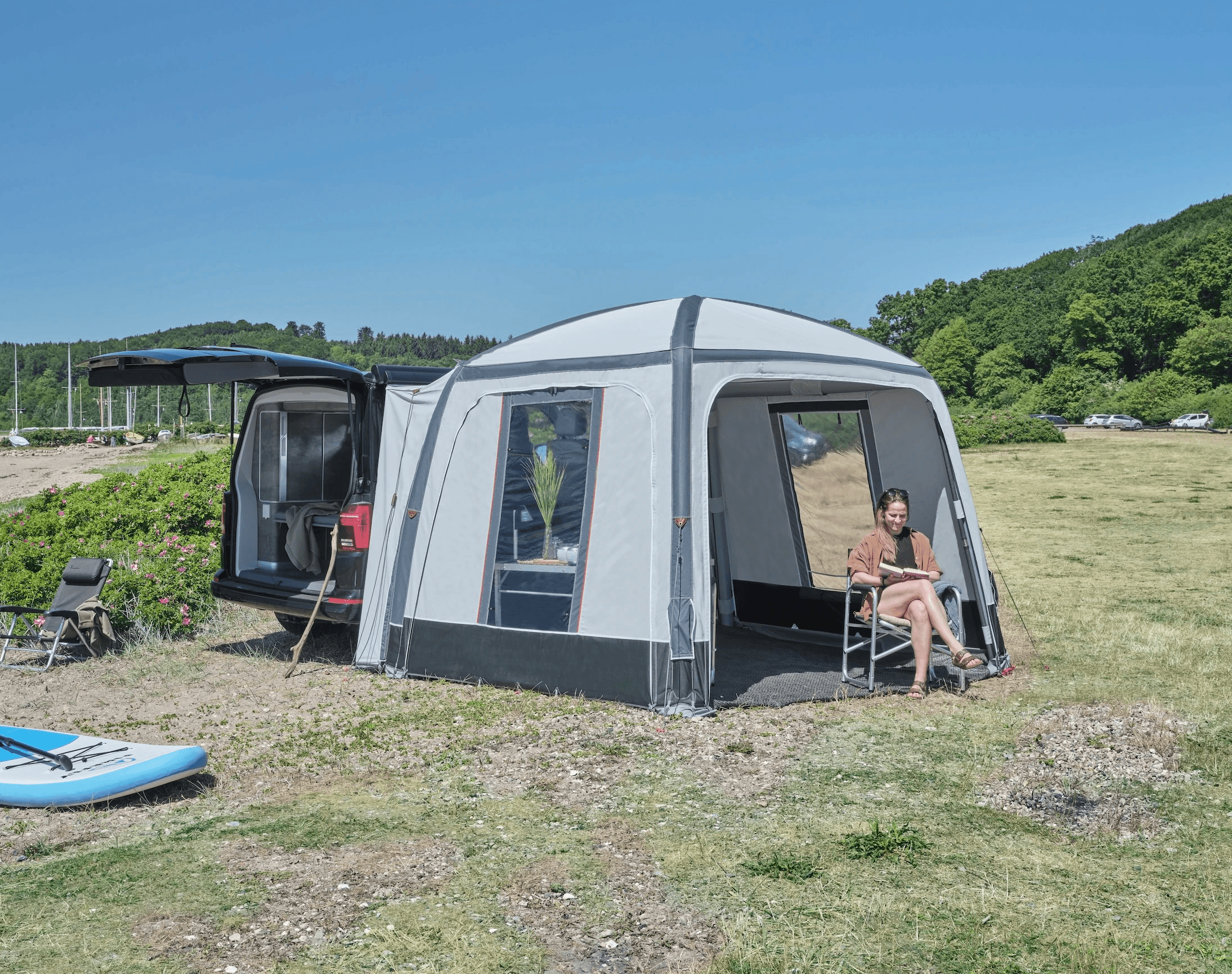
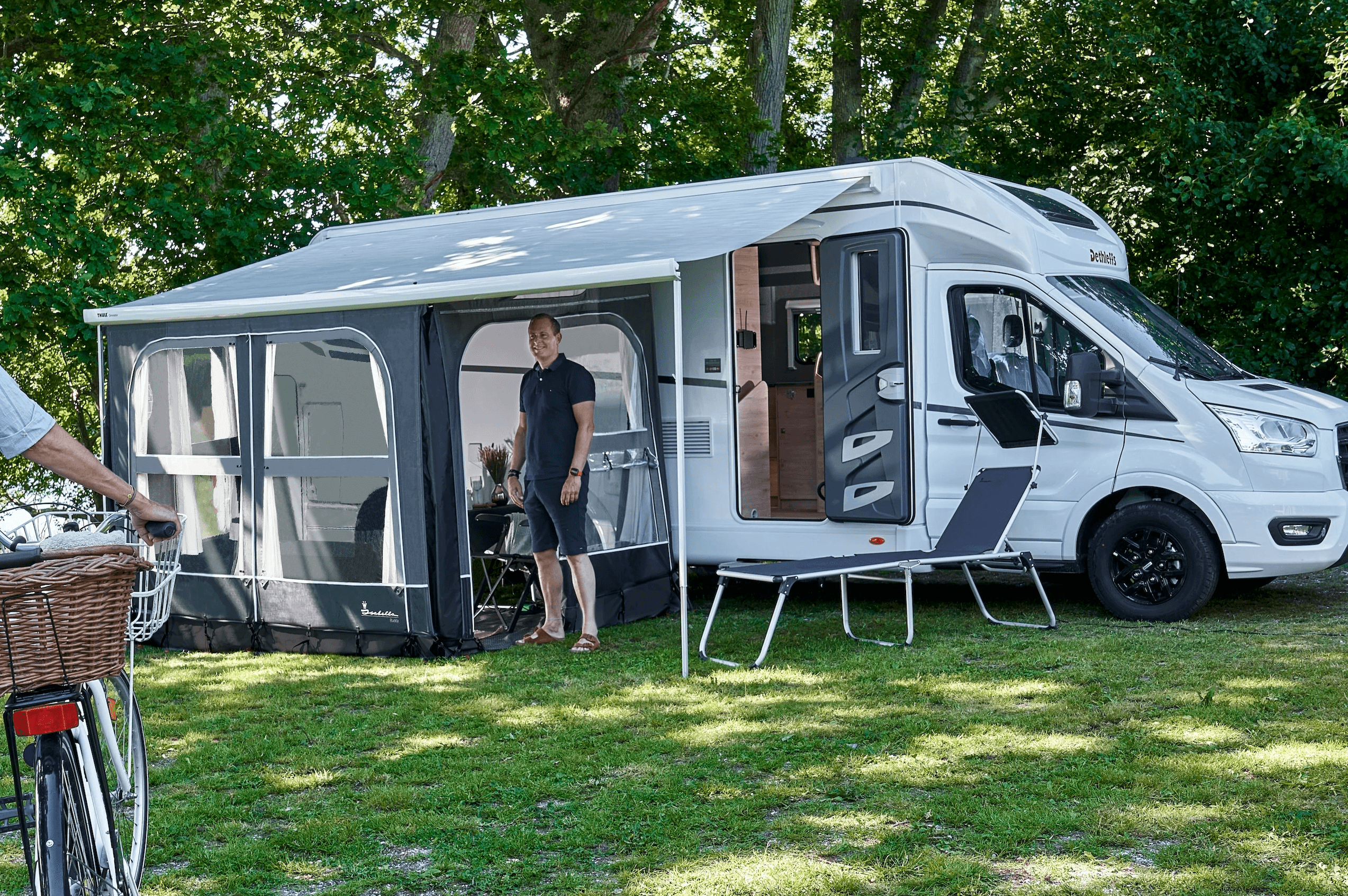
Both of Isabella's current U.S. van products, the Buddy and the X-Tension, use the keder channel as their primary connection point to the vehicle system.
For the Buddy, the connection is direct. The Buddy's Front Panel top edge carries a keder beading that slides into the channel. This positions the room under your extended awning and holds it there. The awning itself becomes the roof of the room.
For the X-Tension, the keder channel serves two functions. The X-Tension's own structure slides into the channel to establish its position. A separate piece called the Tunnel, a shaped fabric sleeve specific to your van's profile, also mounts in the keder channel and then zips onto the rear face of the X-Tension. This creates a sealed passageway from your van's side opening into the room. When you want to drive away and leave the room standing, you unzip the Tunnel and retract your roll-out canopy. When you return, you reconnect.
Different products, same foundation. The keder rail is the connection standard that makes both setups possible.
Which Awnings Are Compatible
Three roll-out canopy brands are sold widely in the United States and all use the same keder channel standard.
Thule
Fiamma
Dometic
Carefree
If you have any of these awnings on your van or motorhome, the keder rail on your roll-out canopy is compatible with both the Isabella Buddy and the Isabella X-Tension.
There are no adapter plates required. No modifications to your roll-out canopy. The connection works because these manufacturers agreed on a shared standard for the keder groove dimensions decades ago. That agreement is what makes the accessory market possible.
The Variable for Each Product
Compatibility itself is not complicated. The keder channel works. The variables are product-specific.
For the Buddy, the variable is awning width. The Buddy's front panel must match the extended width of your roll-out canopy. Isabella offers two front panel sizes for the U.S. market: 270 cm and 320 cm. Measure your roll-out canopy's actual extended width to confirm which size applies.
For the X-Tension, the variable is van height. The Tunnel must match the profile of your van's side opening. A Tunnel that does not match your van's height will not seal the connection between van and room correctly. Isabella currently offers two Tunnel sizes for the U.S. market.
Van Tunnel — for vans with a vehicle height of 7.75 ft to 8 ft. Fits RAM ProMaster, Ford Transit, and similar full-size panel van platforms.
Van High Tunnel — for vans with a vehicle height of 8.4 ft to 9.2 ft. Fits Mercedes Sprinter and high-roof builds.
American campervans are predominantly built on full-size panel van or high-roof van platforms, which is why these are the two sizes available in the U.S. market. Smaller tunnel variants exist for lower-profile European van formats that are not commonly found here.
What the Rail Connection Does Not Do
The keder rail holds the keder beading in position. It does not carry the full structural load of the room.
Both the Buddy and the X-Tension still require pegging at their base perimeter. The keder connection handles one edge. The pegs complete the ground anchor. In wind, this combination is considerably more stable than a fully freestanding tent or canopy of similar size.
That said, neither the Buddy nor the X-Tension is rated for extreme weather. In heavy storms, the correct response is to pack down. All Isabella products are designed for real camping conditions, not for parked exposure to severe weather.
What the Keder Rail Does Not Require
You do not need to modify your van or vehicle to use the keder rail system.
You do not need a permanent track or rail installed on the vehicle body. The connection point lives on the roll-out canopy itself.
What you do need is a roll-out canopy that is in good condition. A worn keder groove or damaged cassette will affect how securely an Isabella product attaches. If your roll-out canopy needs service, address that first.
The Keder Rail as Isabella's U.S. Platform
The Buddy and the X-Tension are the first two Isabella products available in the U.S. market that use the keder rail connection. They will not be the last.
Isabella has been building awning rooms and accessories around the keder standard since 1957. In fact, our founder Søren Odgaard, worked with caravan manufacturers in the 50’s to add keder rails to their caravans so their customers could accessorize with his products. Fast forward to today, an industry he helped create has a broad product range that uses this connection. Some products are similar in concept to the X-Tension, inflatable and freestanding. Others are different in structure and use case. There are products for different configurations, different climates, and different ways of camping.
As we grow in the U.S., we will continue to bring products across. Which ones and when will depend on what we learn from American campers: how they travel, how long they stay, what they need from a base camp, and where the keder rail system adds the most value. That conversation is ongoing.
If you are curious about a specific product from Isabella's European range and whether it will be available in the U.S., Contact Us. Customer interest directly informs what we bring over next.
Next Steps
The Buddy Guide covers the Buddy product in full, including materials, setup, and configuration options.
The X-Tension Guide covers the X-Tension product, the Tunnel selection process, and what the drive-away capability looks like in practice.
If you are deciding between the two, Article 1.5 walks through the comparison directly.