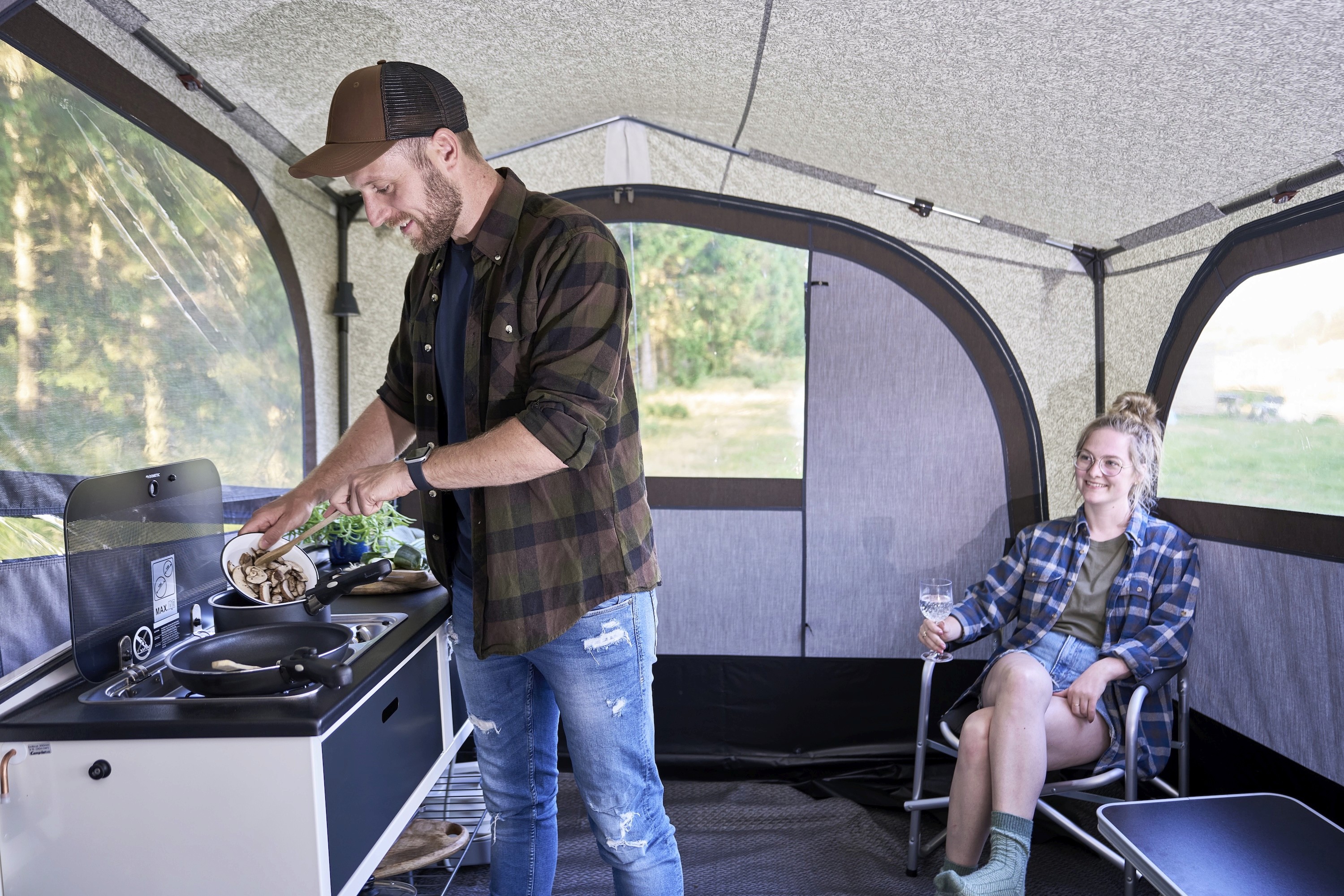
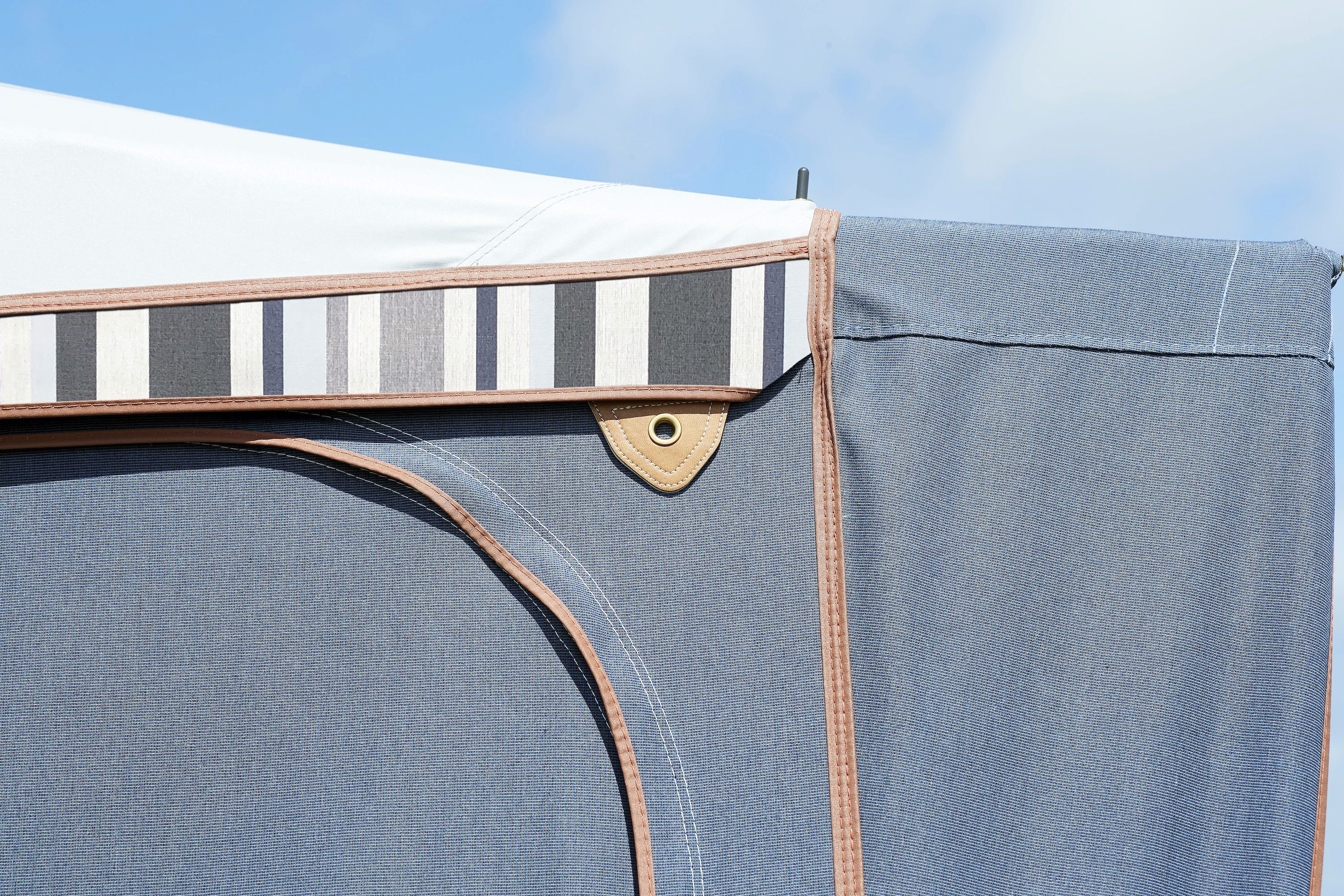
Isabella products are designed and tested across the full range of Northern European weather: Atlantic coastal storms, Scandinavian winters, Alpine cold. The Isacryl fabric, CarbonX poles, and frame systems are built for conditions that most American camping gear never encounters.
Winter camping with Isabella products is possible. It requires understanding two hard limits, and managing your setup accordingly.

Two Limits You Need to Know
Snow load is the primary risk for three-season awning products. The Buddy and X-Tension are three-season products. They are not engineered for sustained snow accumulation on the roof. Wet snow is deceptively heavy. A few inches can exceed frame tolerances before it looks significant from the ground. If snow is in the forecast, monitor your setup and clear the roof before load builds. Do not wait until morning.
In addition to clearing the roof of snow in a Camp-let, ensure any support poles are taught and secured, and adequate pegging is completed. When slack in the canvas builds, snow and water accumulate, adding a centralized pressure to frames which can cause them to buckle.
Window film has a temperature floor. Isabella's window foil is rated to -13 degrees Fahrenheit (-25 degrees Celsius). Below that threshold, the film becomes brittle and folding or packing causes permanent crease damage. In most of the continental U.S. this temperature is rarely reached. In northern states and high-elevation sites it can occur. If temperatures are forecast below -13°F (-25°C), pack down your awning before you sleep.
The Buddy in Cold Weather
The Buddy attaches via the keder rail on your van or motorhome's roll-out canopy. The fabric and poles are unaffected by cold temperatures. Isacryl does not become brittle in cold and remains manageable during setup and pack-down.
The relevant considerations in winter are snow load and moisture management.
Snow accumulation: The Buddy's roof pitch is shallow. Snow does not shed the way it does on a steeply pitched structure. In snowfall, check the roof regularly and clear it with a soft brush before load builds. A light, dry snow presents little risk. Wet, heavy snow is the concern.
Condensation increases in cold weather. The greater the temperature difference between inside and outside, the more vapor condenses on the fabric interior. Keep a ventilation opening cracked when the awning is occupied. If you use a catalytic or propane heater inside the Buddy, be aware that gas combustion produces water vapor, which accelerates condensation and leaves a sticky residue on the roof interior. Clean the inside roof with hot water and a medium-stiff brush after any trip where you've used a gas heater, and treat with AquaTex once dry.
Pack-down: If you pack in snowfall or heavy condensation, do not leave the Buddy folded and stored. Open it to air as soon as you return home. Mildew develops quickly in cold, damp conditions when fabric is packed tight.
The X-Tension in Cold Weather
The X-Tension uses air beams rather than poles. Cold air is denser than warm air, and beam pressure drops overnight as temperatures fall. Check beam pressure each morning in cold weather and top up as needed. A beam that was correctly inflated at sunset may be noticeably soft by dawn.
All other winter considerations are the same as the Buddy: snow load monitoring, condensation management, gas heater residue, and ensuring the awning is fully aired before storage.
The X-Tension's deeper pitch and larger footprint mean more roof surface area for snow to accumulate. In heavy snowfall, check it more frequently than you would the Buddy.
The Camp-let Earth in Cold Weather
The Camp-let Earth uses Isacryl canvas throughout the sleeping compartments and main living area. The frame is steel and carbon fiber. None of these materials are adversely affected by cold temperatures.
Condensation is the primary cold-weather consideration. A greater temperature differential between the heated interior and cold exterior means more condensation on interior surfaces. Keep the sleeping compartments ventilated overnight. Open the main panels briefly in the morning to allow vapor to escape before packing. Never pack the canvas with condensation present. The canvas must be dry before folding.
Snow load on the Camp-let Earth roof: the Earth's roof geometry and frame structure are more robust than a van awning, but sustained heavy snow accumulation should still be cleared. The same principle applies: monitor and clear before load builds.
If you use any gas heating inside the Camp-let Earth living area, apply the same protocol as with the Buddy and X-Tension: clean the interior roof with hot water and a brush after the trip, and treat with AquaTex once fully dry.
The Windscreen in Cold Weather
The Windscreen is more useful in winter than in summer. Reducing wind chill across your outdoor living area makes a meaningful difference when temperatures are low. The Light Isacryl fabric and CarbonX poles are unaffected by cold.
Peg more aggressively than you would in summer. Frozen ground does not allow pegs to shift after placement, so get your positioning right on the first attempt.
After a Winter Trip
End-of-trip care matters more in winter than in summer. Drying takes longer in cold air, and the consequences of packing damp are the same year-round: mildew grows into the fabric structure and cannot be fully removed.
If you cannot fully dry everything before packing the vehicle, spread the fabric loosely when you return home and allow it to air before storing. Even a few hours of loose airing before final folding makes a material difference.
Check water beading behavior after any winter trip where the fabric was wet for extended periods. If water is spreading rather than beading cleanly, apply AquaTex to the inside of the fabric before storage.