The first season with Camp-let Earth is about learning the product. The second season is about using it. By the third, most owners have stopped thinking about the system at all and started thinking only about where they're going.
This guide covers what experienced Camp-let owners actually discover over time: the habits that form, the adjustments that get made, the things that matter less than expected, and the things that matter more. If you're considering Camp-let Earth and want to understand what ownership looks like beyond the first few trips, this is the article to read.
Setup Stops Feeling Like Work
The most consistent thing owners report after their first full season is that setup anxiety disappears. The 11-stage sequence that felt procedural and careful on the first trip becomes fluent. Hands find the fittings without looking. The sequence runs in the background while a conversation happens in the foreground.
This transition is not gradual. Most owners describe a specific trip, usually the fourth or fifth, where the setup felt different. Not faster, necessarily, just easier. The cognitive load dropped out, and the physical sequence was all that remained. After that point, 15 to 20 minutes is the reality, not an aspiration.
Pack-down tends to improve faster than setup. Without the decision-making involved in the first erection of the structure, the reverse sequence becomes automatic more quickly. Most owners find pack-down to be the more satisfying of the two processes after the first season.
Vehicle Freedom Changes How You Camp
Before buying Camp-let Earth, most owners understand the vehicle freedom argument intellectually. The trailer unhitches, the vehicle is free, you can drive independently. What they don't anticipate is how much it changes the actual experience of a trip.
With a rooftop tent or a ground tent, the decision to leave camp involves breaking down or committing the shelter. Most people don't bother unless they have to. With Camp-let Earth, leaving camp is a non-event. The basecamp stays exactly as it is. Owners find themselves making spontaneous side trips they previously would have skipped: driving to a swimming hole in the afternoon, going into the nearest town for dinner, exploring a road they noticed on the way in.
The camp also functions differently as a result. Because it stays set up and intact, it starts to feel like a place rather than an equipment configuration. Chairs stay in position. The kitchen stays organized. Returning to camp after a day out feels like returning to somewhere, not reassembling something.

The Canvas Performs Differently Than Synthetic Tents
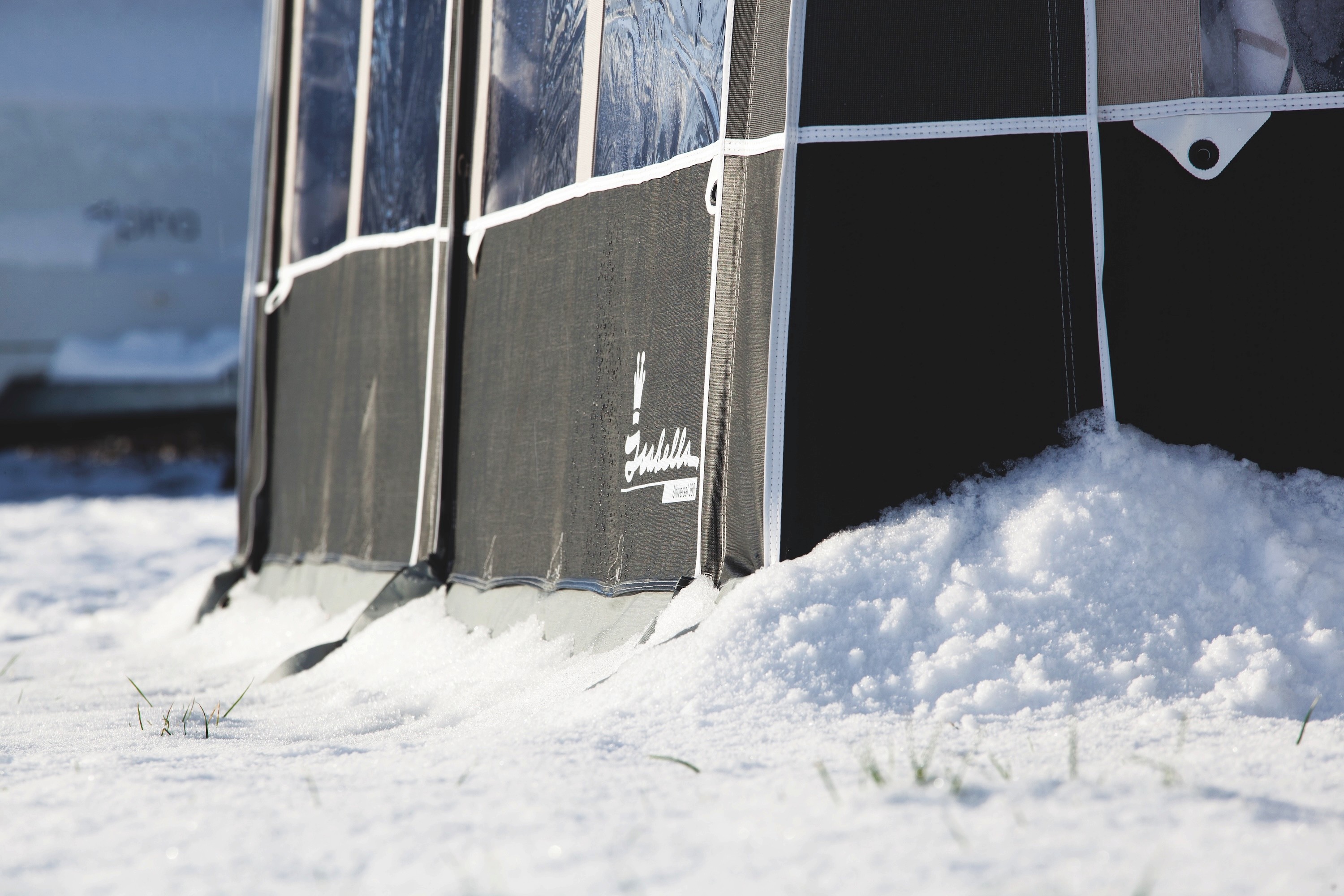
Owners who come from synthetic tent backgrounds consistently notice the same things about Isacryl canvas. First, condensation is different. In a nylon or polyester tent, moisture builds on the inner surface and drips. In Camp-let Earth's Isacryl canvas, the fabric breathes, and the interior stays significantly drier even in cold overnight conditions. This changes the morning experience considerably.
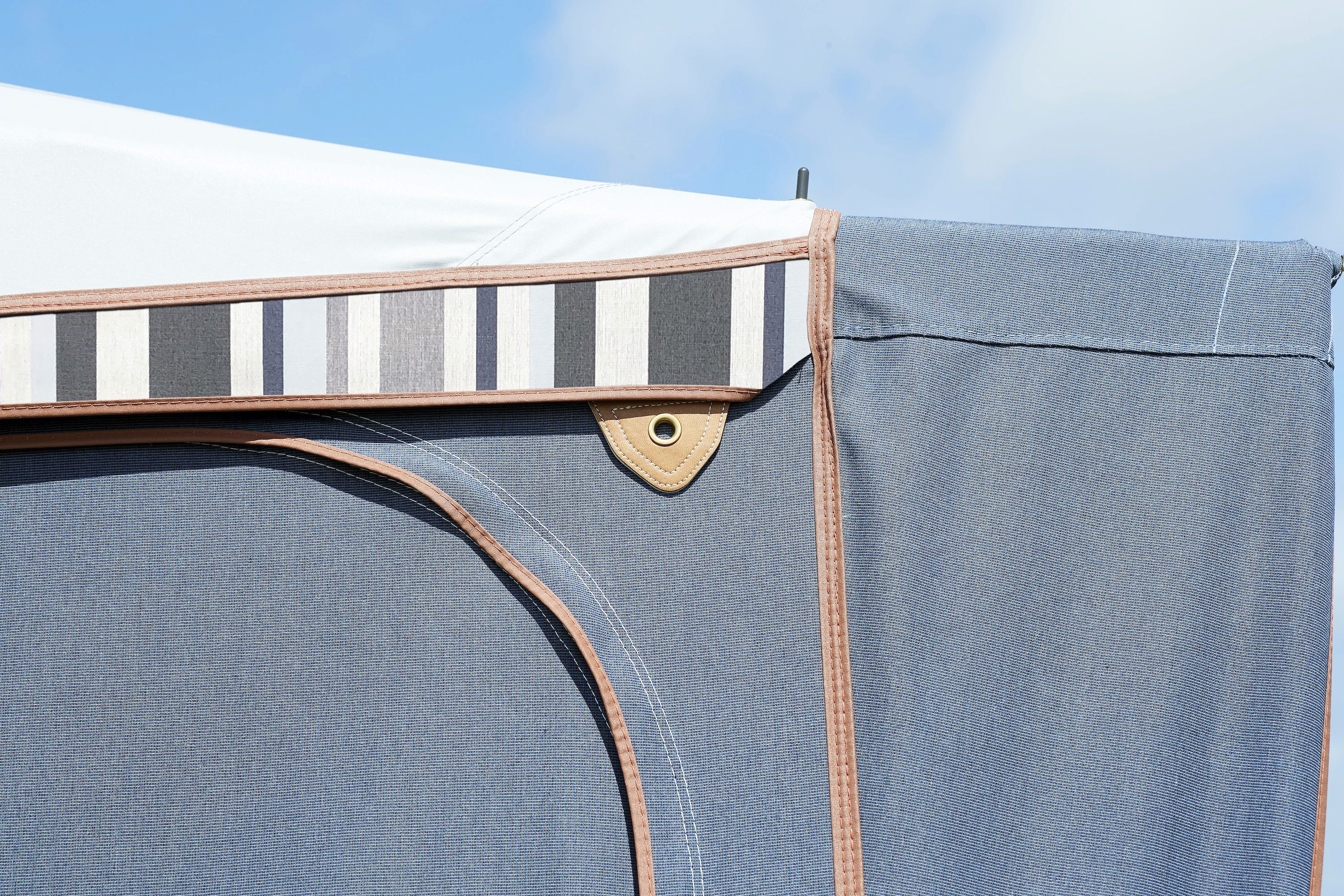
Second, heat management is better. Synthetic fabrics absorb radiant heat and transfer it inward. Isacryl reflects more of that energy, and the color retention of fiber-dyed acrylic means the reflective performance doesn't degrade as the fabric ages. A Camp-let Earth that has been used for five years in full-sun conditions handles heat similarly to a new one.
Third, rain sounds different. Canvas under rain has a specific sound that synthetic tents don't reproduce. This is not a performance characteristic, but owners who have camped in rain with Camp-let Earth consistently mention it. It is quieter and more subdued than the sharp patter on a nylon fly.
The care routine for Isacryl is different from synthetic care, but simpler in practice. The main rule is to never pack wet. Everything else, the cleaning approach, the re-proofing timeline, the storage requirements, is covered in the Caring for Isacryl Fabric guide. Owners who follow the basic care protocol consistently find the canvas looks and performs well years into ownership.

Packing Systems Develop Quickly
Camp-let Earth has a defined storage architecture: the enclosed under-cabin compartment for dry goods and luggage, the open space between the top lid and bottom lid when closed, the roof cargo platform for bikes and bulky gear, the cabin pelmets for bedside items, and the living area for everything in active use.
Most owners develop a consistent packing system within two or three trips. Once that system is in place, loading and unloading becomes fast and reliable. The same bag goes in the same place. The kitchen kit lives in the same compartment. Bedding rolls the same way each time. Experienced Camp-let owners often describe packing down not as breaking camp but as putting things away.
The roof platform deserves specific attention. Its 176-pound (80 kg) capacity is genuine, and owners who use it for bikes and storage boxes find it changes how they think about what they can bring. Items that previously required interior packing space move to the roof. Interior space becomes less premium. Longer trips become more practical.

Accessories Get Added Over Time, Not All at Once
Camp-let Earth's modular design means that ownership typically evolves. Most buyers start with the base configuration: two sleeping cabins, the living area, and whatever kitchen package they chose at purchase. Over the first season, they identify what they actually use and what they actually wish they had.
The most commonly added accessory after the first season is an annex. An annex adds a sleeping space that attaches to the main structure, expanding capacity to six people. Families who start with four people find the annex transforms the product for guests, older children, or extended family trips.
The sun tent is the second most common addition. It extends the covered living area forward, creating a larger shaded zone that becomes particularly valuable in hot climates and on beach or desert sites where shade is limited.
The side tent is typically added by owners who camp in wetter climates or want a dedicated covered kitchen space separate from the main living area. It attaches to the side of the trailer and creates an enclosed cooking and storage zone with its own door.
The practical point is that you don't need to configure for every possibility at purchase. The system is designed to grow with how you use it. Starting with the base and adding what you actually need after a season of use results in a better-configured product than speccing everything upfront.

The Product Is Built to Last Longer Than You Expect
Camp-let has been building trailer tents since 1969. Original Camp-let owners in Europe still have functioning products after decades of use. This is not marketing language. It reflects material choices made specifically for longevity: marine-grade GRP fiberglass, stainless steel hardware, aluminum fittings, and Isacryl canvas. These are not cost-optimized materials. They are specified for the kind of use that accumulates over years.
The implication for ownership is that Camp-let Earth is not a product you budget to replace. The maintenance mindset is closer to what you bring to a boat or a quality vehicle than to a camping product with a three to five year horizon. Canvas can be re-proofed. Hardware can be serviced. Worn components can be sourced and replaced. The underlying structure, treated well, outlasts the circumstances of its original purchase.
Owners who approach it this way get more from the product than owners who treat it as equipment. The distinction matters because it changes how you care for it between trips, how you address small issues before they become larger ones, and how you think about the value of what you own.
What Matters Less Than Expected
Several concerns that loom large before purchase tend to matter very little in practice.
Towing anxiety
First-time towers are often more nervous about the process than the reality warrants. Camp-let Earth at 595 pounds (270 kg) is one of the lighter trailers on the road. Vehicles rated to tow it handle it without strain. Within a few hours of driving, most first-time towers have stopped thinking about the trailer at all.
Storage between trips
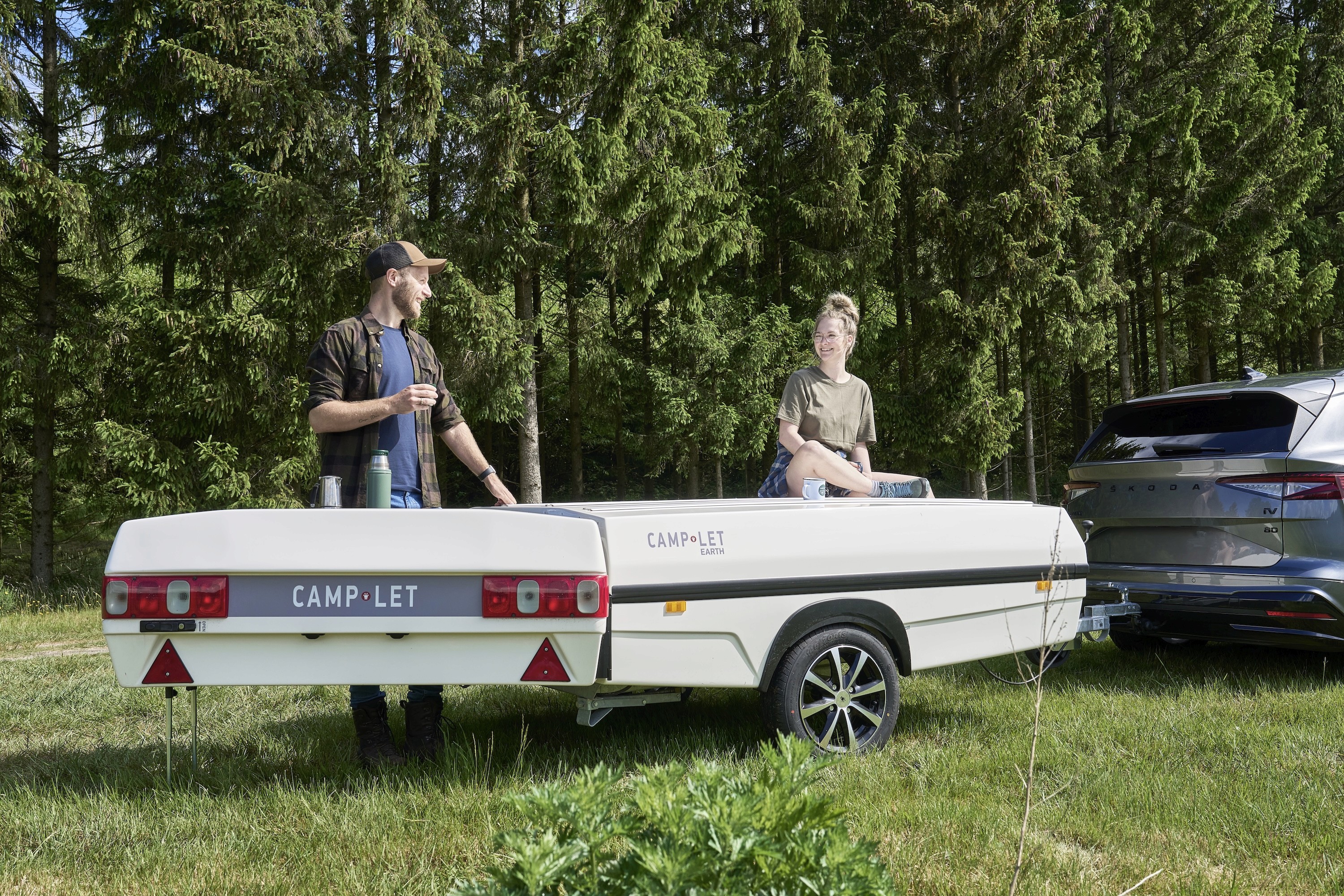
Finding somewhere to store the trailer between trips is a concern at the consideration stage that rarely becomes a problem in practice. Camp-let Earth at 37.5 inches (0.95 m) tall fits under most standard garage doors. Its footprint when parked is roughly the size of a large motorcycle or a compact car. Most owners find a solution quickly and stop thinking about it.
Two accessories are worth knowing about for storage. The Tarpaulin Cover is a lightweight, waterproof cover that fits over the closed trailer during storage. It protects against rain and dirt, covers the tailgate seal against water ingress during extended storage, and includes a zip that adjusts height to accommodate a loaded roof rack. It takes up almost no space when not in use and is the simplest way to protect the investment between seasons.
For owners with limited garage floor space, a Storage Bracket with Wheel is available by special order. It allows the trailer to be tipped onto its side and rolled on two integrated wheels, reducing the floor footprint significantly and making it easy to maneuver in tight spaces. It fits all Camp-let models. Contact Us for availability and lead times.
Campsite restrictions
Some owners worry about campsite policies on trailers before purchasing. In practice, Camp-let Earth is treated as a standard towed trailer at nearly all established campgrounds and most dispersed camping areas. Its compact closed dimensions mean it rarely poses the size or clearance issues that larger trailers create.

What Matters More Than Expected
The morning experience
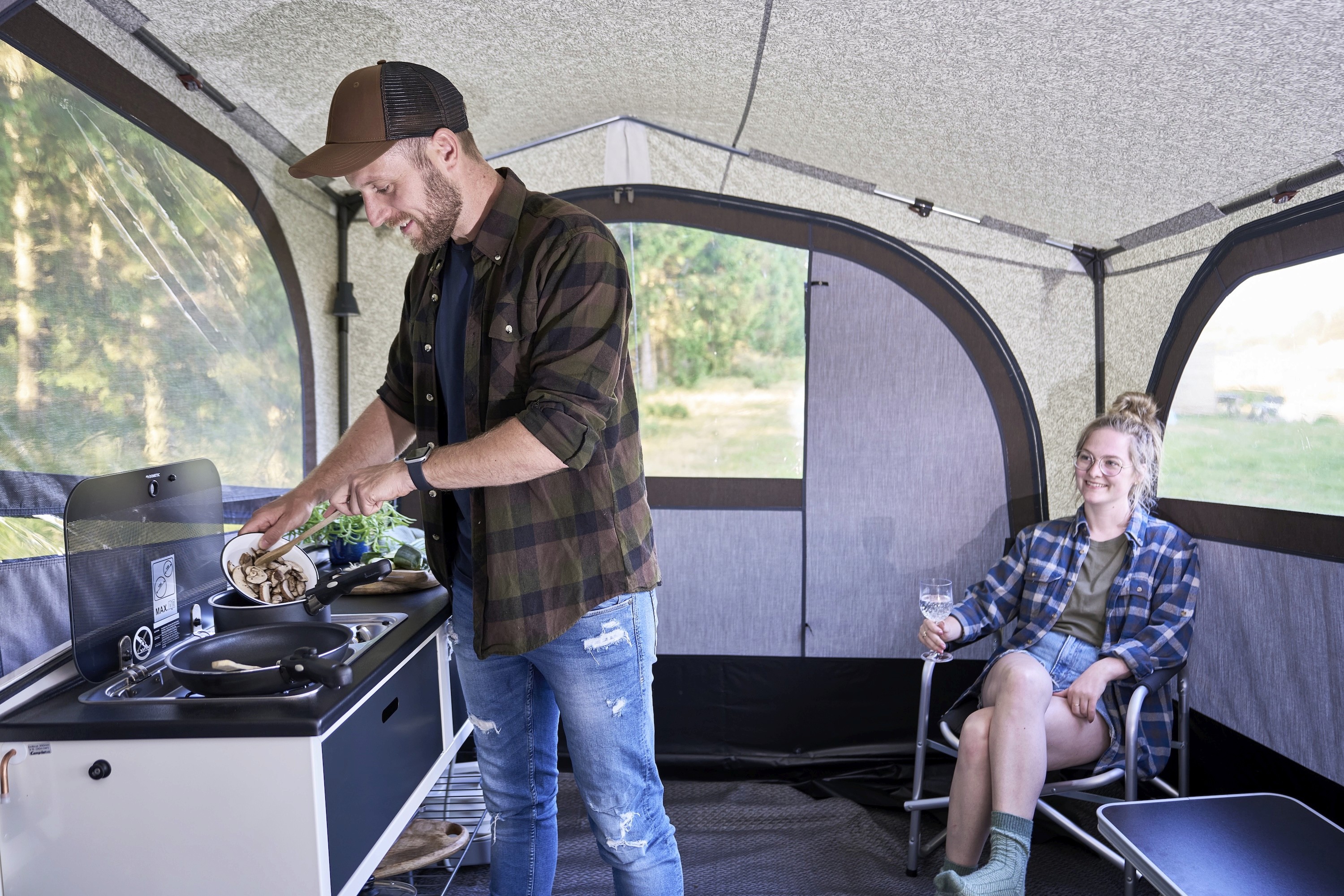
Owners consistently underestimate how much the morning experience matters. Waking in a sleeping cabin that blocked the early light, with dry air and a separate living space to move into, is meaningfully different from waking in a ground tent. The first cup of coffee under the living area awning while camp is already set up and organized is something owners mention repeatedly when describing what they value about the product.
The effect on who comes with you
Comfort levels vary across camping companions. Owners often find that people who declined previous camping invitations, or who came reluctantly, respond differently to Camp-let Earth. The standing height, the weather protection, the separation between sleeping and living, and the ability to cook in a covered space change the proposition for people who find ground tent camping uncomfortable. Trips become more viable for more people.
How often you use it
The most consistent long-term owner report is that they camp more often after buying Camp-let Earth than they did before. Setup confidence removes the activation energy that made frequent trips feel like a commitment. The product itself raises the quality of the experience enough that the decision to go becomes easier. Owners who expected to use it four to six times a year often find themselves using it eight to ten.

One Last Thing
Camp-let Earth is a product with a learning curve and a long payoff. The first trip is the hardest. The first season is the investment. What comes after is the return: a system you know well, that goes where you want to go, and that produces the kind of camping experience that makes you book the next trip before the current one is over.
If you're at the point of deciding, the Camp-let Earth: Full Setup Guide covers what the first few trips actually involve. If you’ve already purchased and are preparing for your first season, the Caring for Isacryl Fabric guide and the accessory installation guides in this series are the next things to read.