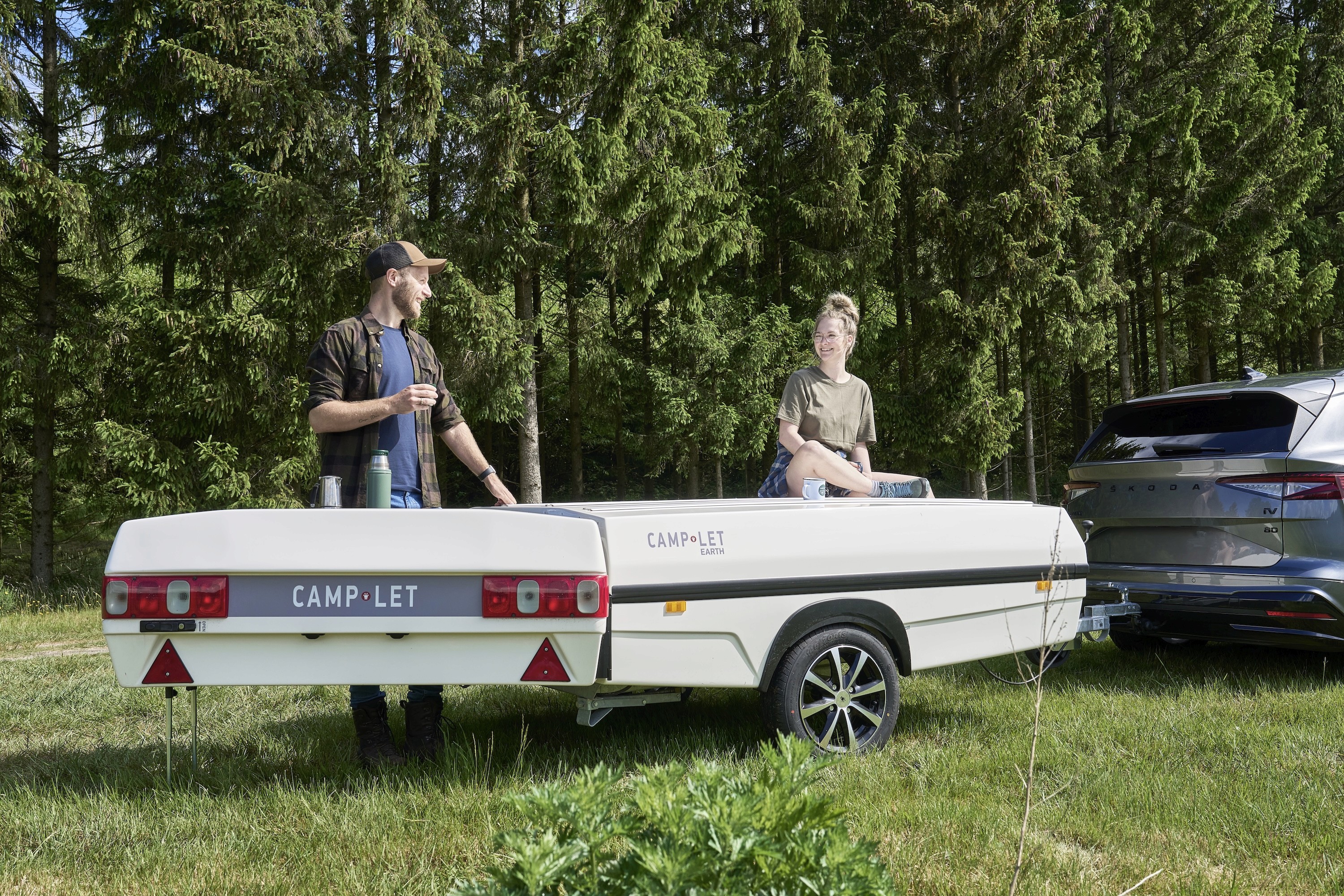
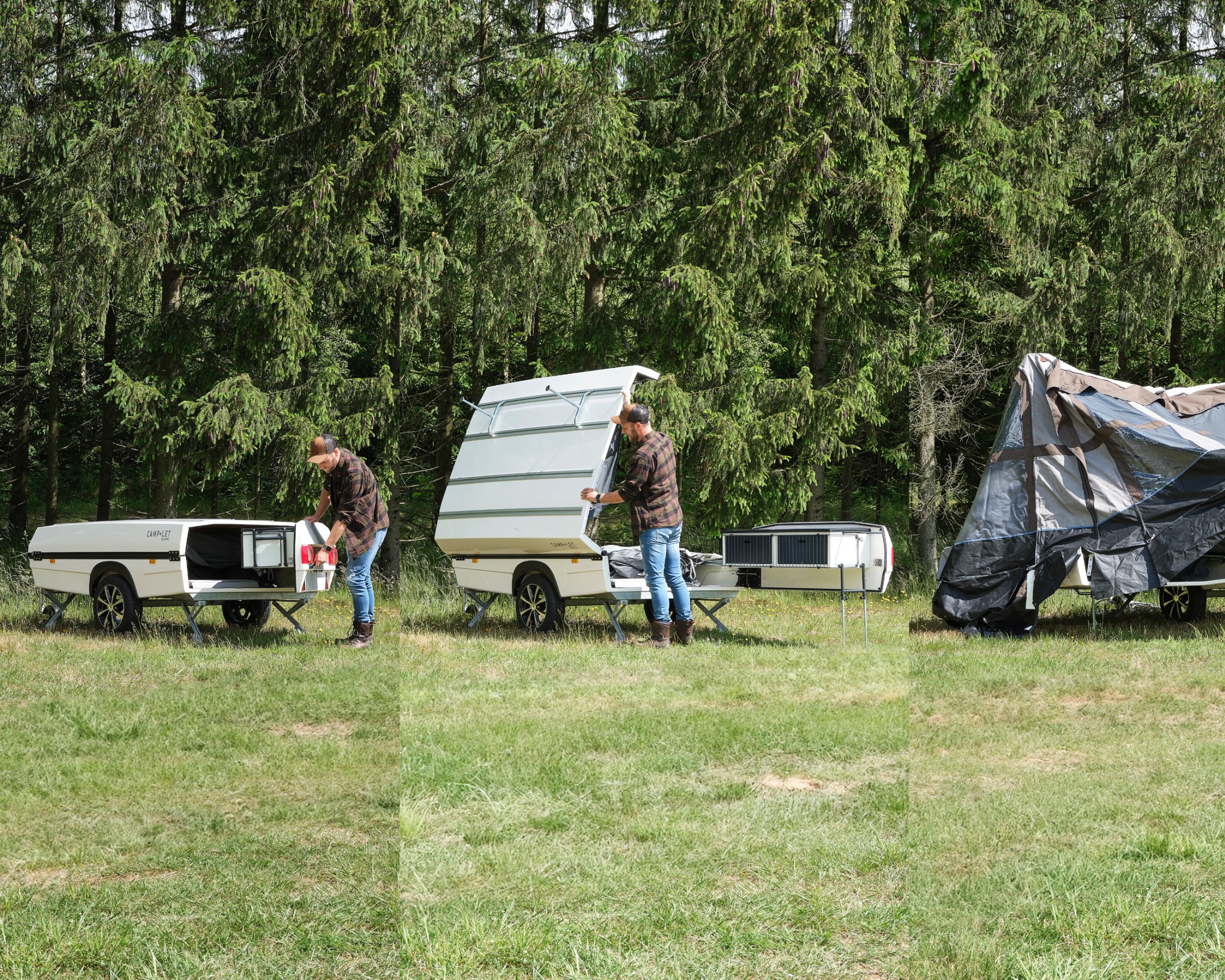
One of the most common questions before purchasing Camp-let Earth is whether your vehicle can tow it. The answer for most people is yes. At 595 pounds unladen, Camp-let Earth sits well within the tow rating of the majority of vehicles on American roads, including crossovers, sedans, compact SUVs, and electric vehicles with towing capability. You do not need a truck. That said, towing is not just about whether a vehicle can pull a given weight. It involves understanding a few specific numbers about your vehicle and knowing how to check them. This guide explains what matters, what to look up, and what to watch for on the road.
The Number That Matters Most
Tow rating is the maximum weight your vehicle is rated to pull. It is set by the manufacturer based on the vehicle's engine, transmission, brakes, cooling system, and chassis. You will find it in your owner's manual or on a sticker inside the driver's door jamb. It may also be listed on the manufacturer's website by trim level and configuration.
Camp-let Earth unladen weighs 595 pounds. When loaded with gear, bedding, a kitchen package, and personal items for a trip, the weight increases. A realistic loaded estimate for a well-equipped Camp-let Earth is 700 to 900 pounds depending on what you carry. As a general guide, your vehicle's tow rating should comfortably exceed your expected loaded trailer weight, with a margin to spare.
Any vehicle rated to tow 1,500 pounds or more will handle Camp-let Earth without issue under normal conditions. Vehicles rated at 1,000 pounds can tow it adequately with a light load, but will feel the trailer on grades and in heat.

Hitch Requirements
Camp-let Earth uses a standard 2-inch ball hitch. This is the most common trailer hitch configuration in the United States and fits standard Class I, II, and III receiver hitches. If your vehicle does not have a factory hitch, aftermarket options are available for virtually every make and model with a tow rating. Installation is typically straightforward and does not require modification to the vehicle.
The trailer also connects to your vehicle via a 7-pin electrical connector for lights and brakes. Most modern tow-equipped vehicles have this connector from the factory or can be fitted with an adapter from a 4-pin flat connector, which is more common on lighter-duty setups.
Camp-let Earth is available with or without trailer brakes depending on specification. The version without brakes weighs 595 pounds unladen. The version with brakes weighs 650 pounds unladen.
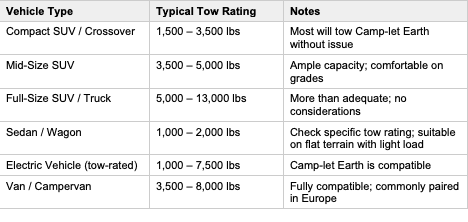
Vehicle Types That Work Well
Electric Vehicles: A Natural Pairing
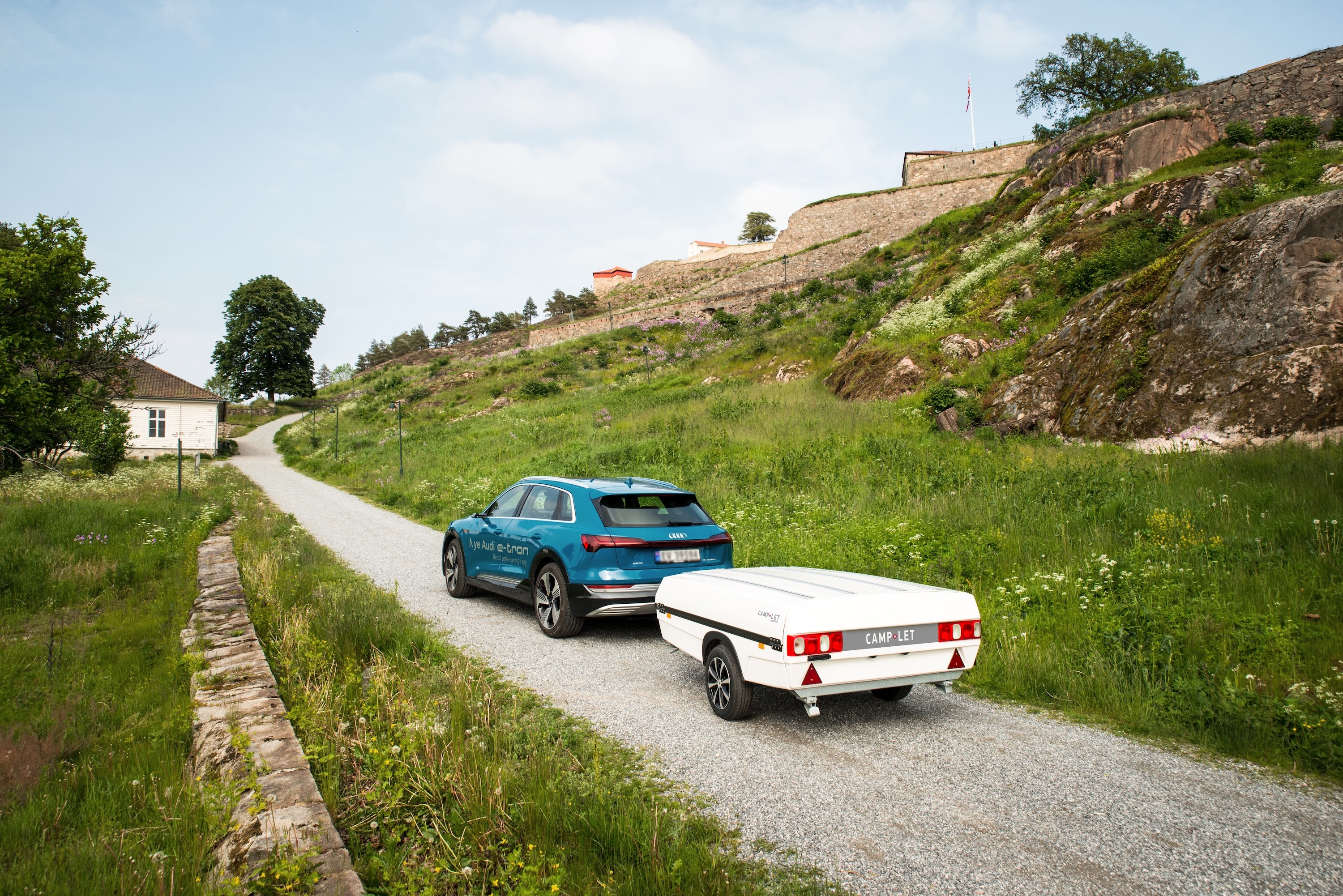
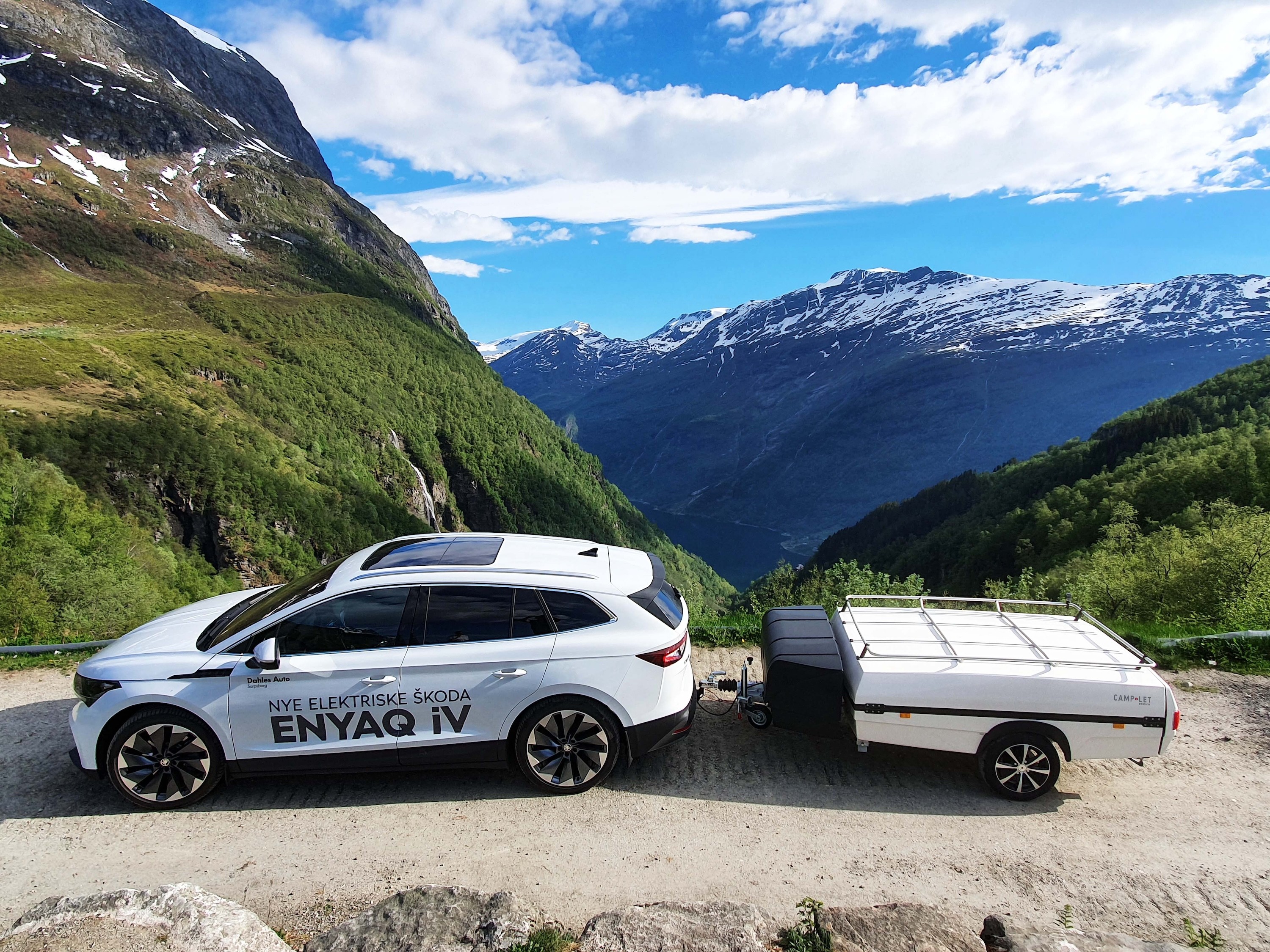
The generic assumption about EV towing is that it dramatically reduces range. For heavy, boxy trailers driven at highway speeds, that's true. Camp-let Earth is a different situation. We ran an EV towing test in Denmark, using a Volkswagen ID.4 with an 82 kWh battery and a rated range of 321 miles (517 km). The results are worth understanding before you assume the worst.
On ordinary roads at 50 mph (80 km/h), towing Camp-let Earth reduced range by approximately 9.5 percent compared to driving the same route without a trailer. That is a minor impact by any measure, and well within what most EV owners can plan around without significant disruption to their trip.
The motorway result is more surprising. Driving on the motorway with Camp-let Earth at lower highway speeds of 50 mph (80 km/h) produced 15.86 percent more range than driving the same vehicle without a trailer at 80 mph (130 km/h). The Camp-let enforces a lower travel speed, and the efficiency gains from driving slower more than offset the added trailer weight. If your route involves primarily motorway driving, towing Camp-let Earth may actually extend how far you can travel between charges compared to your normal driving habits.
The reason comes down to physics. Camp-let Earth weighs 595 pounds and has a low, aerodynamic profile in travel configuration. At 50 mph (80 km/h), drag is minimal. At 80 mpg (130 km/h), drag increases significantly regardless of what is behind the vehicle. Camp-let's compact shape adds less aerodynamic resistance than most people expect, and the enforced speed limit does the rest.
The practical consideration for EV owners is trip timing rather than range anxiety. Driving at 50 mph (80 km/h) on routes where you would normally travel faster adds time to your journey. A trip that normally takes four hours may take five. Factor that into your planning, along with charging stop timing, and EV travel with Camp-let Earth is straightforward. The range impact itself is far smaller than most people assume.
Before Your First Trip: What to Check
Tow rating is the starting point, but a few additional checks are worth completing before your first trip.
Tongue Weight
Tongue weight is the downward force the trailer hitch places on the back of your vehicle. As a general rule, tongue weight should be 10 to 15 percent of the total loaded trailer weight. For a loaded Camp-let Earth at 800 pounds, that's 80 to 120 pounds on the hitch. Most compact and mid-size SUVs have tongue weight ratings well above this. Check your vehicle's tongue weight capacity in the owner's manual alongside the tow rating.
Tire Pressure
Towing adds weight to the rear axle of your vehicle. Rear tire pressure should be set to the higher end of the manufacturer's recommended range when towing. Check the sticker in the door jamb for load-dependent pressure guidance. Under-inflated rear tires increase sway risk and accelerate wear.
Mirrors
Camp-let Earth is 63 inches wide in travel configuration. Standard vehicle mirrors cover this width on most SUVs and larger vehicles. On narrower vehicles, check that you have adequate rear visibility alongside the trailer before heading onto a highway. Clip-on towing mirror extensions are inexpensive and available for most side mirror profiles.
Brakes
Camp-let Earth is light enough that most tow vehicles can stop it adequately without trailer brakes under normal conditions. On significant descents or in emergency stops, trailer brakes provide an additional safety margin.
On the Road
Towing Camp-let Earth is straightforward for any driver who has towed before. For first-time towers, there are a few adjustments that become second nature quickly.
Braking distance increases when towing. The added weight means the rear of your vehicle pushes forward during hard stops, so increase your following distance and anticipate stops earlier than you normally would.
Turning radius increases. Camp-let Earth has a short trailer tongue, which helps, but you will still need to take wider turns than usual, particularly in campsites, parking lots, and tight roads. The trailer follows a tighter arc than your vehicle, so slow down and allow more clearance on the inside of turns.
Reversing with a trailer is the skill most first-timers want to practice before arriving at a campsite. Camp-let Earth's compact size makes it more forgiving than larger trailers, but the principle of steering in opposite directions still applies. Practice in an empty parking lot before your first trip if you haven't reversed a trailer before.
At highway speeds, Camp-let Earth's aerodynamic profile reduces the sway tendency common in box-profile trailers. You may feel the trailer at speed in strong crosswinds, but it tracks well behind most vehicles. If you notice rhythmic sway developing, reduce speed gradually rather than braking hard.
Checking Your Vehicle's Tow Rating
Your vehicle's tow rating can vary by trim level, engine, and option packages. The most accurate source is the owner's manual or the manufacturer's tow guide, available on most automaker websites by year, model, and configuration. Search for your vehicle name followed by 'tow rating' or 'trailer towing guide' and look for the official manufacturer document rather than third-party summaries.
If you are purchasing a vehicle specifically to tow Camp-let Earth, the lowest-cost tow-equipped option from most mainstream manufacturers will be sufficient. The weight of Camp-let Earth does not require a heavy-duty package.