Rooftop tents and trailer tents serve different versions of the same desire: sleeping somewhere other than the ground with less effort than a traditional tent. Beyond that starting point, they are genuinely different products designed for different camping styles. This guide compares them directly across the factors that matter most when deciding.
This is not a comparison written to make Camp-let Earth win. Rooftop tents are excellent products for specific use cases, and a person optimizing for those use cases should buy one. What follows is an honest assessment of where each product has the advantage, so you can make the right decision for how you actually camp.
At a Glance
Camp-let Earth | Rooftop Tent | |
|---|---|---|
Sleeps | 4 standard, 6 with the Annex | 2–4 |
Floor area at camp | 194 sq ft (18.0 m²) | 50–60 sq ft (4.6–5.6 m²) |
Standing height | 7.4 ft (2.3 m) | None. Sitting height only |
Setup time, practiced | 15 to 20 minutes | Under 15 minutes |
Weight | 595 lb (270 kg), towed | 130–200 lb (59–91 kg), on the roof |
Where the weight sits | Behind the vehicle | Above the vehicle |
Vehicle at camp | Free to detach and drive | Committed to the campsite |
Effect on the vehicle | None when unhitched | Permanent rack, raised centre of gravity, reduced fuel economy year-round |
Additional load capacity | 176 lb (80 kg) roof platform | None |
Storage between trips | Needs a garage bay, driveway, or lot | Stays on the vehicle, or needs two people to remove |
Remote and off-road access | Limited by trailer clearance and turning | Goes wherever the vehicle goes |
Entry price | From $13,695 | From about $1,000; $2,500–$5,000 for established brands |
The Defining Difference: Vehicle Freedom at Camp
When a rooftop tent is set up, your vehicle is the tent's structure. The sleeping platform is attached to your roof rack. The ladder is deployed. Your vehicle is not going anywhere until you pack the tent down.
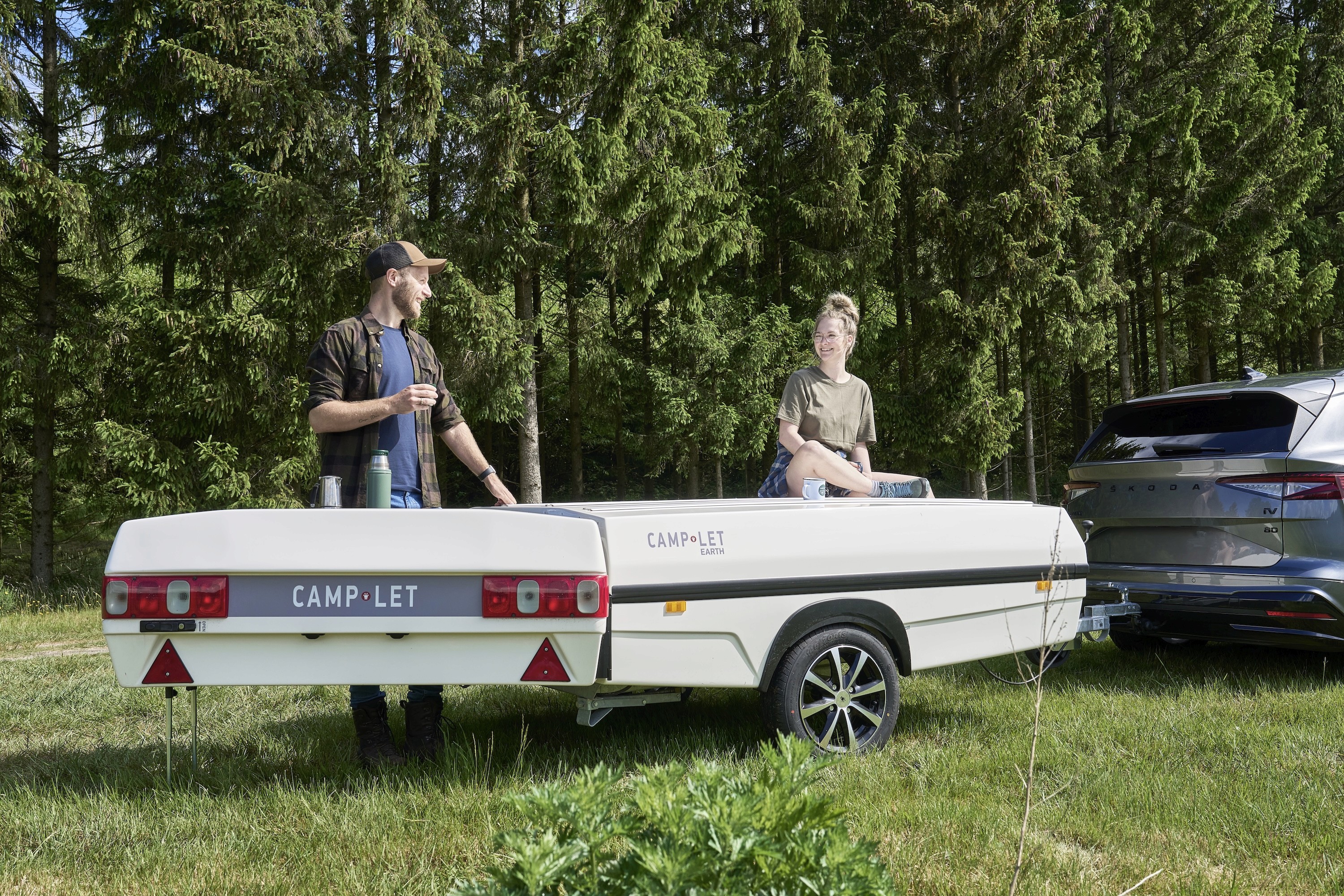
Camp-let Earth unhitches at camp and stays put. Your vehicle is free the moment the corner steadies are down and the electrics are disconnected. You can drive to get firewood, explore a nearby trail, go into town for dinner, or simply move the vehicle to shade without touching the camp setup. The basecamp stays exactly as you left it.
For many campers, this is the decisive factor. If you camp in one place and don't need the vehicle once you're there, a rooftop tent's vehicle commitment is irrelevant. If you use your camp as a base for day activities, drive to multiple stops on a trip, or simply want the flexibility to move without breaking down shelter, Camp-let Earth has a structural advantage that no rooftop tent can match.
Space: Not a Close Comparison
A standard two-person rooftop tent provides a sleeping platform of roughly 50 to 60 square feet (4.6 to 5.6 m²), depending on the model. The living arrangement is horizontal. You sleep in it, and that's primarily what it is for. Getting up in the night means climbing a ladder. Getting dressed means sitting or lying down to do it.
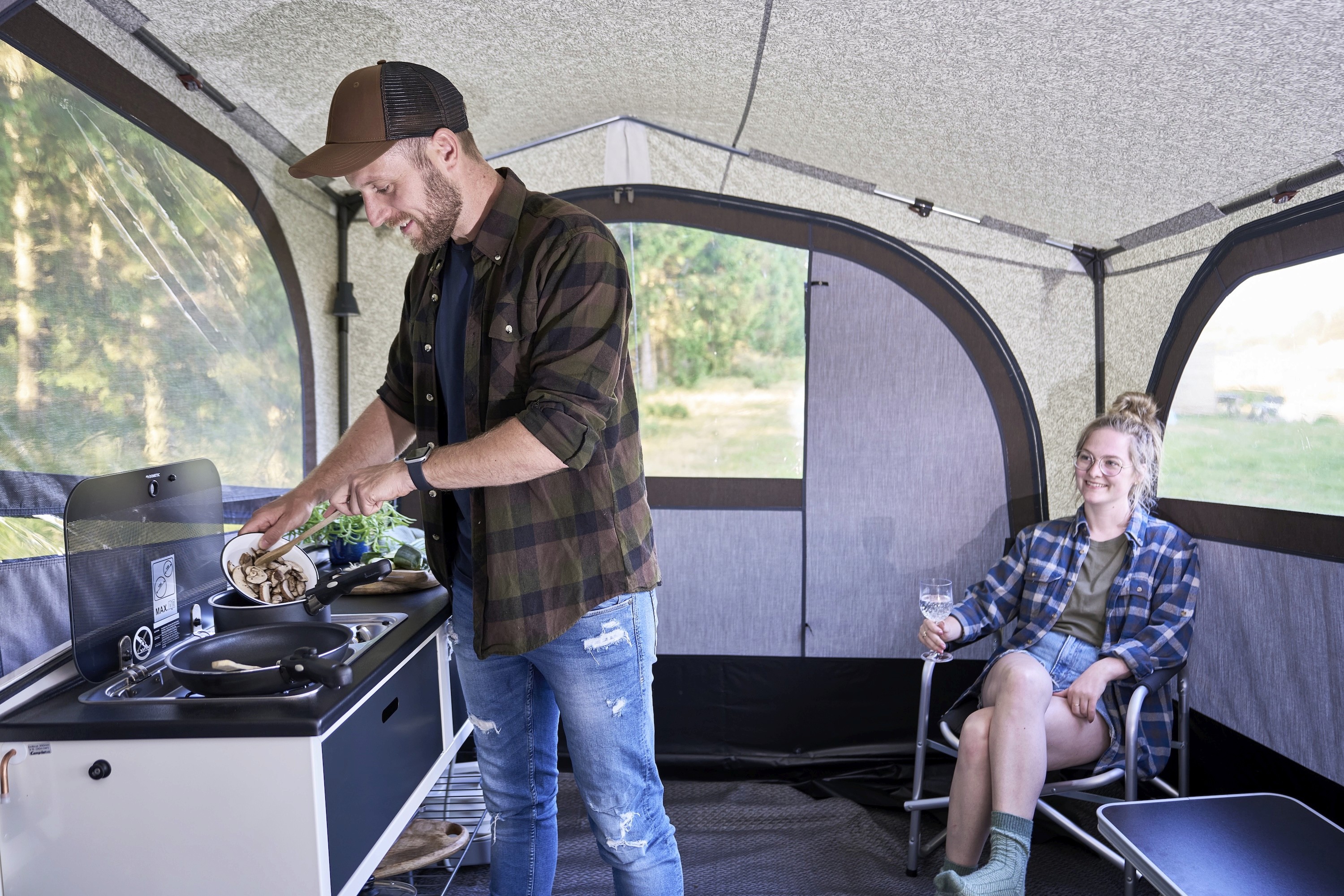
Camp-let Earth provides 194 square feet (18 m²) of living and sleeping space with 7.4 feet (2.3 m) of standing height at the peak. Two people can move around the living area at the same time. Four people can eat together under cover. The sleeping cabins are elevated and separate from the living area. Getting up at night means stepping down off the trailer bed, not descending a ladder from a roof rack.
If space is the primary consideration, Camp-let Earth wins this comparison decisively. If a sleeping platform is all you need and you prefer the simplicity that comes with it, a rooftop tent is the right size for the job. There is no objective reason to pay for space you don't use.
Setup Time: Rooftop Tents Are Faster
A soft-shell rooftop tent unfolds and is ready in under five minutes. A hard-shell model pops up with a single gas-strut lift and takes about the same. Camp-let Earth takes 15 to 20 minutes for an experienced owner. On your first few trips, it takes longer.
This is a real difference and worth being direct about. If you are making frequent short stops, arriving at camp after dark regularly, or simply want to minimize setup time as a priority, rooftop tents have a genuine advantage. Camp-let Earth rewards people who are setting up for a stay of at least one full day and who are willing to invest a few trips into learning the sequence.
The tradeoff is what you get once setup is complete. A rooftop tent is ready in five minutes and gives you a sleeping platform. Camp-let Earth takes 20 minutes and gives you a fully enclosed living space with standing height, covered dining, weather protection at ground level, and separation between sleeping and living areas. Whether that tradeoff is worth it depends entirely on how you camp.

What Each Option Does to Your Vehicle
A rooftop tent lives on your vehicle year-round for most owners. A quality hard-shell roof tent weighs between 130 and 200 pounds (59 and 91 kg), sitting permanently on the roof rack. This affects fuel economy every day you drive, adds wind noise at highway speeds, prevents your vehicle from fitting in standard parking structures, and places a continuous load on your roof rack and mounting points.
Camp-let Earth is a trailer. When you're not camping, it parks in your garage or driveway. Your vehicle returns to its normal state: no roof load, no drag penalty, no height restriction. You only accept the towing penalty when you're actually traveling to camp.
For people who use their vehicle daily, the year-round roof load of a rooftop tent is a real cost. The fuel economy impact alone over several years adds up. For people who rarely drive their tow vehicle outside of camping trips, the calculation is different.
Cost: Looking at the Full Picture
Entry-level rooftop tents start around $1,000 for a basic soft-shell model. Quality hard-shell tents from established brands typically run $2,500 to $5,000. A full overlanding setup from a premium brand can exceed $5,000 for the tent alone, before the roof rack it requires.
Camp-let Earth sits at a higher initial price point. For current pricing, see the Camp-let Earth page. What the comparison requires is an honest look at what the price includes. Camp-let Earth provides sleeping for four, a full standing-height living area, integrated storage, a roof cargo platform rated to 176 pounds (80 kg), and a modular expansion system. Arriving at a comparable level of camp infrastructure with a rooftop tent requires a tent, a separate awning, a separate sleeping solution for additional people, and external storage. The total cost of the equivalent system converges quickly.
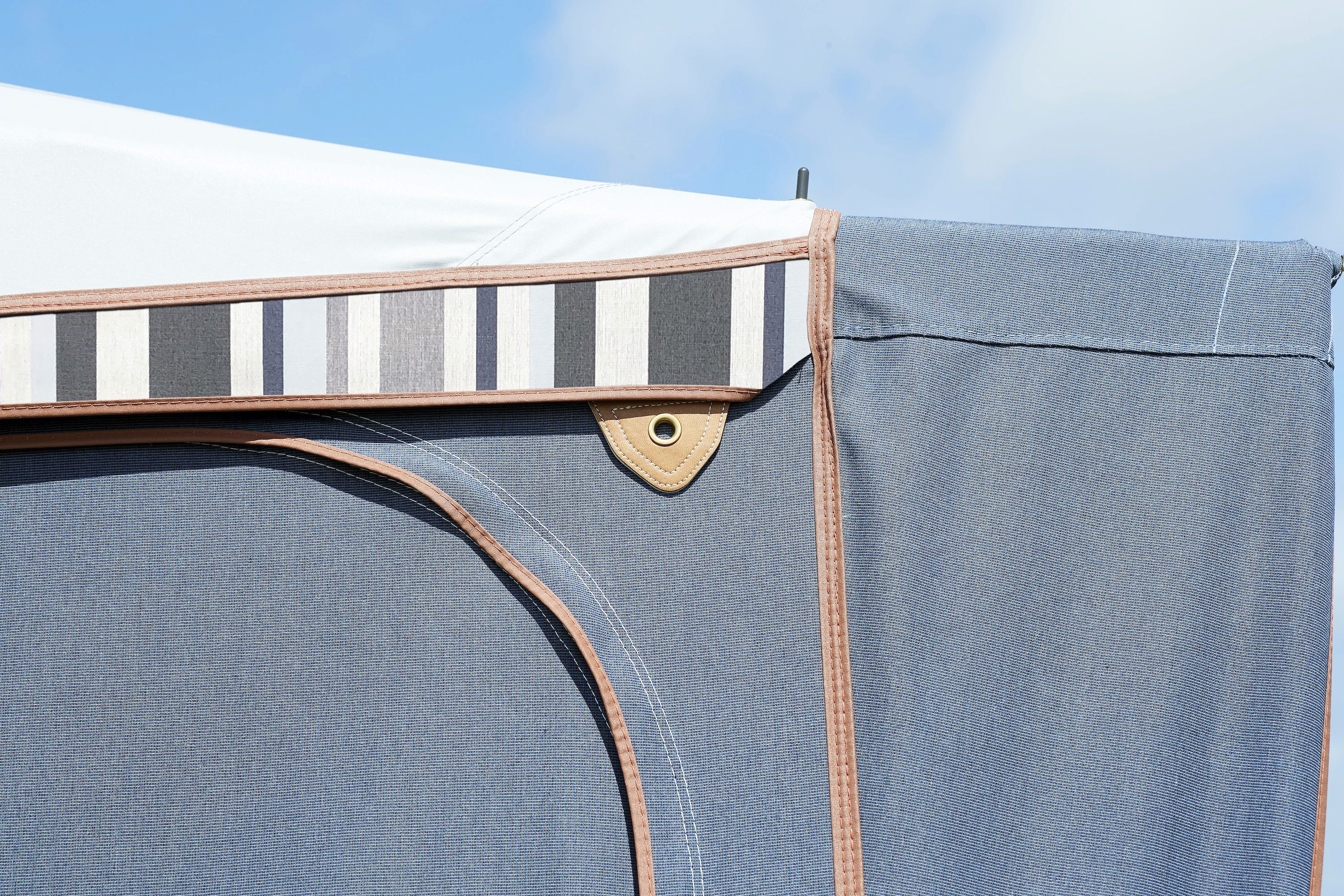
The more important cost consideration is longevity. Rooftop tent canvases are primarily nylon or polyester. Camp-let Earth uses Isacryl acrylic, a fiber-dyed material that holds color and structural integrity for decades under regular use. The product is designed to be owned long-term, not replaced on a three to five year cycle. Over ten or fifteen years of regular use, the cost picture looks quite different.
Off-Road and Remote Access: Where Rooftop Tents Have the Edge
If your camping style involves driving down technical off-road tracks to reach remote sites, a rooftop tent has a real advantage. It stays attached to the vehicle, goes where the vehicle goes, and requires no separate access road wide enough or smooth enough for a trailer.
Camp-let Earth is a towed trailer. It follows paved roads and graded dirt roads well. It is not designed for technical off-road tracks or deeply rutted terrain. If your priority is reaching very remote sites that require serious off-road driving, a rooftop tent is the right tool.
The practical reality for most American campers is that the vast majority of established campgrounds, dispersed camping areas, and overland routes are accessible to a towed trailer. Camp-let Earth does not restrict access to the type of camping most people actually do. But it does restrict access to the most technical terrain, and that's worth knowing before you buy.
Who Should Buy Which
Camp-let Earth is the right choice if:
You camp with two to four people and want a genuine living space, not just a sleeping platform. You use your camp as a base and want to drive freely once you've arrived. You camp for two or more nights at a time and value comfort over absolute speed of setup. You want a system that expands over time as your camping style evolves. You drive your tow vehicle daily and don't want a permanent roof load affecting fuel economy and clearance.
A rooftop tent is the right choice if:
You camp solo or as a couple and a sleeping platform is genuinely all the space you need. You make frequent short stops and fast setup time is a priority. Your camping style involves technical off-road driving that a trailer cannot follow. You don't have space to store a trailer between trips. You prefer a simpler system with fewer components.
The Right Answer Depends on How You Camp
Neither product is objectively better. They are optimized for different priorities. A rooftop tent is a fast, compact, vehicle-integrated sleeping solution. Camp-let Earth is a self-contained basecamp system that travels behind your vehicle and stays put when you leave. The question is which set of tradeoffs matches how you actually use your gear.
If you've read through this guide and Camp-let Earth sounds like the right fit, the Camp-let Earth Full Setup Guide covers exactly what ownership involves before you commit. If you're still uncertain, the long-term ownership guide in this series covers what people discover after the first season, which is often what finally clarifies the decision.