Sooner or later the last morning of a trip is a wet one, and the Camp-let has to go into the trailer with rain on it. That is allowed. What matters is what you do in the next 24 hours. Here is how to pack down wet without doing any harm, and how to put it right at home.
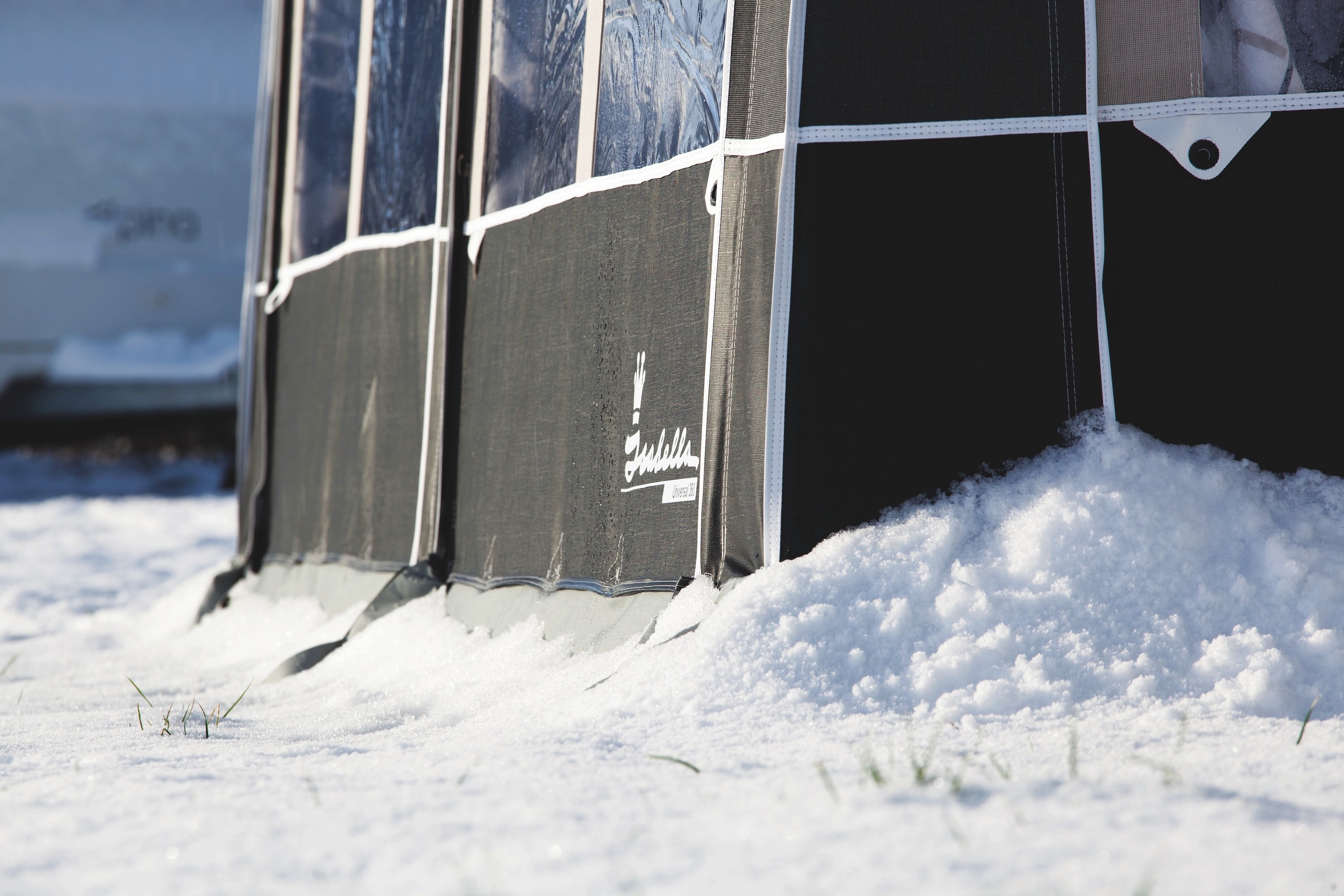
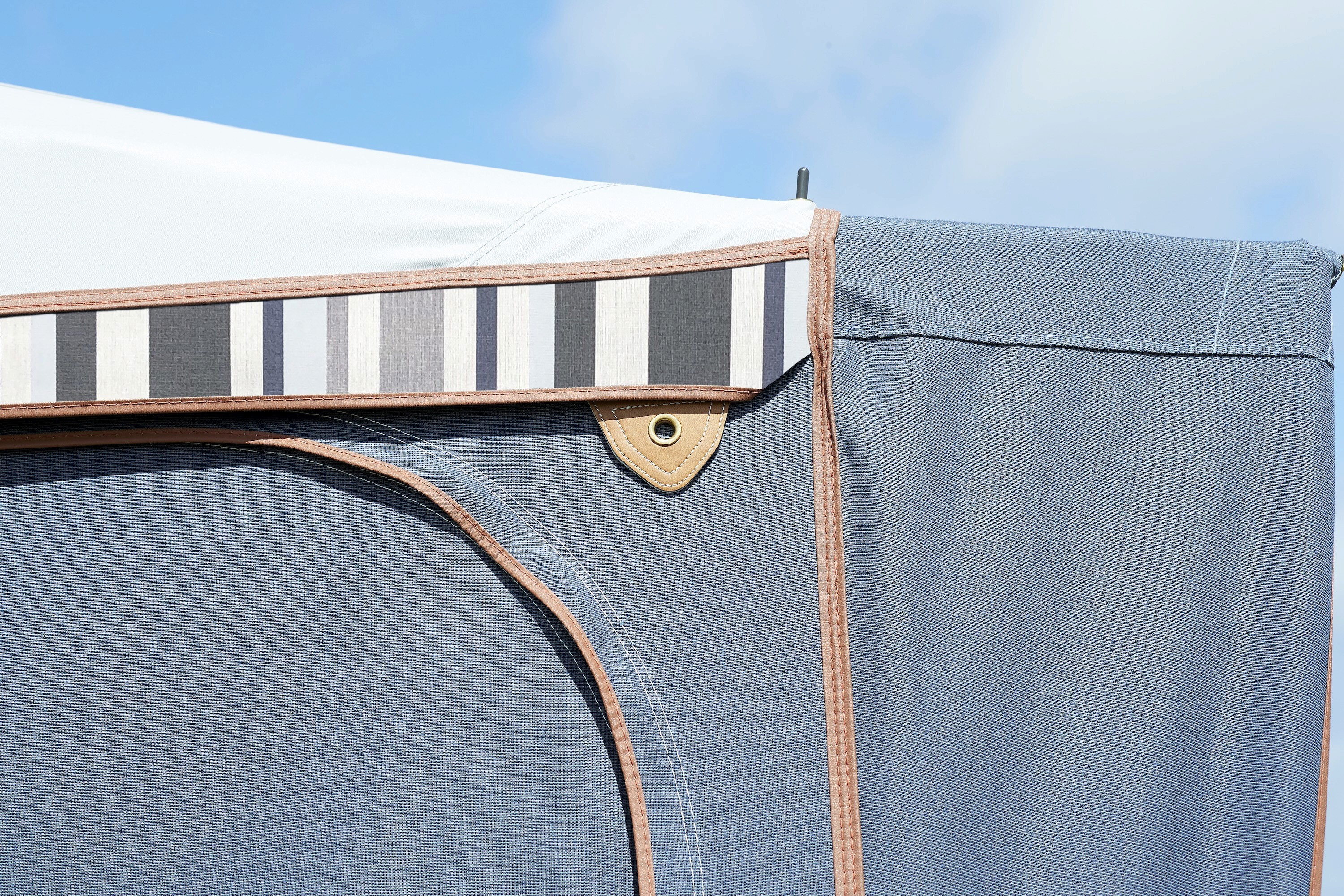
Two facts set the rules. The first is from Camp-let’s own user instructions, where the same sentence appears model after model: “If you have packed away the Camp-let wet or even slightly damp, you must set up and completely dry it out (within 24 hours).” The second is from Isabella’s guidance for its awnings, which are made of the same Isacryl fabric as the Camp-let tent: if it comes down wet, “hang it up to dry for two or three days.” So packing wet is not a mistake. Leaving it packed wet is. The canvas is Isacryl, an acrylic that is impregnated throughout rather than coated, and a day folded wet does it no harm. A week can. Mildew that establishes in the weave is not a surface stain; it cannot be fully removed, and the impregnation around it is usually gone with it.
At the Campsite
Pack down in the same order as always, the setup sequence in reverse, with four changes.
Bedding comes out first and goes in the tow vehicle, in a bag that keeps it dry. Sleeping bags, pillows, and anything fabric that is not the tent. The trailer carries the canvas and the mattresses; it should not carry wet bedding for the drive home.
Knock the water off before you take the tension off. With the roof pole and side poles still in, push up on the roof from inside, or run a soft brush or a towel along the outside, so the standing water runs off the edges instead of pooling in the folds when the roof comes down. Do this before you pull the side poles; a slack wet roof holds water in every crease.
Wipe what you can reach. The kitchen top, the lid, and the tailgate get a towel before they close. Inside the sleeping cabins, wipe the mattress surfaces if rain got in and let them stand open while you do the rest.
Keep the wet towels out of the trailer. They go in a bag in the car. Nothing that is sodden goes into the body of the Camp-let that does not have to.
Then fold the canvas and swing it back into the trailer as you normally would. It will be heavier and it will not fold as neatly. That is fine. Close the lid, latch it, and drive. Do not try to dry it at the campsite in rain; you will not win, and a Camp-let fully open in wind and rain is harder to pack than one that is already down.
Rain or Condensation
Before you decide the Camp-let leaked, look at where the water is. Isabella’s note on condensation in awnings applies to a canvas tent too: it “almost always appears on the roof, collecting around the poles,” which is why people mistake it for a leak. Four people sleeping in a closed canvas room on a cool night put a lot of water into the air, and it lands on the coldest surface, which is the roof. If the walls are dry and the roof is wet around the poles, that is condensation. The fix is airflow: leave a vent or a door cracked overnight, keep wet gear and cooking outside, and do not run a heater in a closed tent. Isabella’s seven tips for reducing condensation cover the rest. Either way, condensation is water in the canvas, and it counts. A Camp-let that was dry outside but wet inside still has to be opened at home.
At Home, Within 24 Hours
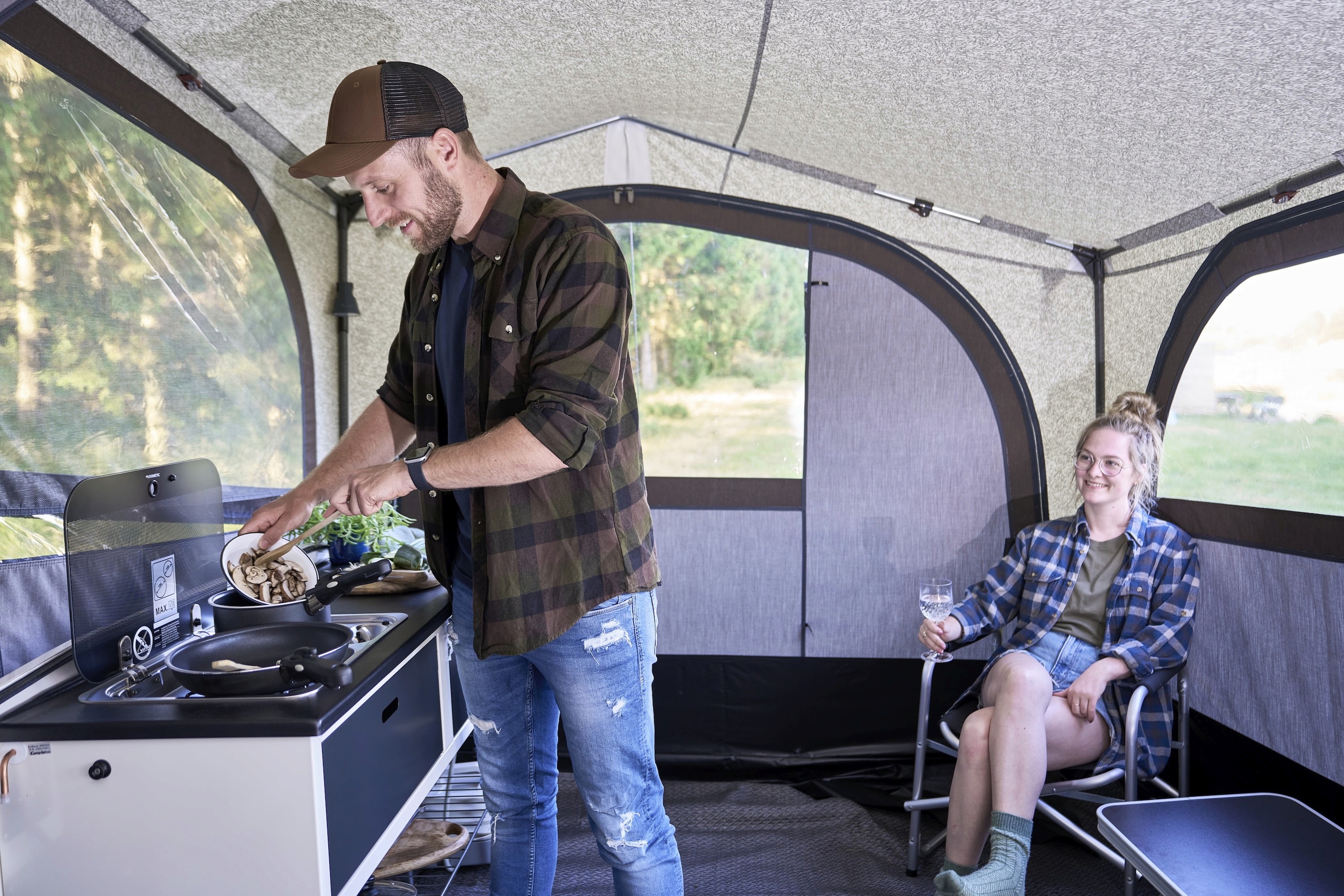
Set it up. Not half open, not the lid propped in the garage: set it up the way you would at a campsite, with the canvas forward, the poles in, and the sleeping cabins zipped open, because that is the only position in which every fold of canvas is exposed to air. That takes the same 18 ft 10.5 in (5.75 m) of driveway or lawn it takes at camp. Pegs are optional on a calm day; tension helps the roof shed water, so put the side poles to full height.
Open everything. Both sleeping cabins, the front, every zip that opens. The more of the tent that is open, the faster it dries.
Lift the mattresses on edge if the cabins got wet, and dry the cabin base under them. Trapped water under a mattress is the one place mildew starts that you do not see.
Sun is fine. Isacryl is fiber-dyed; the color goes all the way through the thread, so a few days in direct sun to dry is not going to fade it.
Give it the time Isabella gives an awning: two or three days, longer in humid weather. A fan in the garage doorway on a wet week does what the wind does on a dry one.
Before you pack it down, run your hand along the inside of the roof seams, the bottom hem, and the corners of the sleeping cabins. Those are the last places to dry. If any of it is cool to the touch, it is still damp.
While it is open, this is the moment to rinse off whatever the trip left behind: mud on the bottom hem, bird droppings, pollen, sap. Clean water and a soft brush, no soap. Organic material left on the fabric over the next wet week is what feeds mildew, and it is easier to remove now than in the spring.
If You Missed the Window
If the Camp-let sat packed wet for a week or two, open it and look before you worry. Grey or black speckling, usually along folds and seams, is mildew. Small early spots on Isacryl can be cleaned: clean water and a soft brush first, and IsaClean, Isabella’s own fabric cleaner, for spots that have set. Never household soap, detergent, or bleach; even a single wash with them can strip the impregnation. After cleaning, dry the fabric fully and check whether water still beads on the affected area. If it spreads and soaks in, restore the impregnation with AquaTex applied to the inside of the fabric, on clean, dry canvas. The Isacryl care guide covers both in detail. If a smell lingers after cleaning and a full dry, or the speckling covers more than a few patches, contact us with photos before you treat anything further; we would rather look at it than have you guess.
The Short Version
Packing wet is fine. Staying packed wet is not.
Bedding and towels go in the car. Knock the water off the roof before it comes down.
Within 24 hours, set it up fully at home and leave it open for two or three days.
Rinse off the trip while it is open. No soap.
Check seams, hems, and under the mattresses before it goes back in.
The Full Setup Guide has the pack-down sequence this guide assumes, and Seasonal Storage covers the end of the year, when the same rule applies with a much longer storage period behind it. The Isacryl care guide explains why the fabric behaves the way it does.