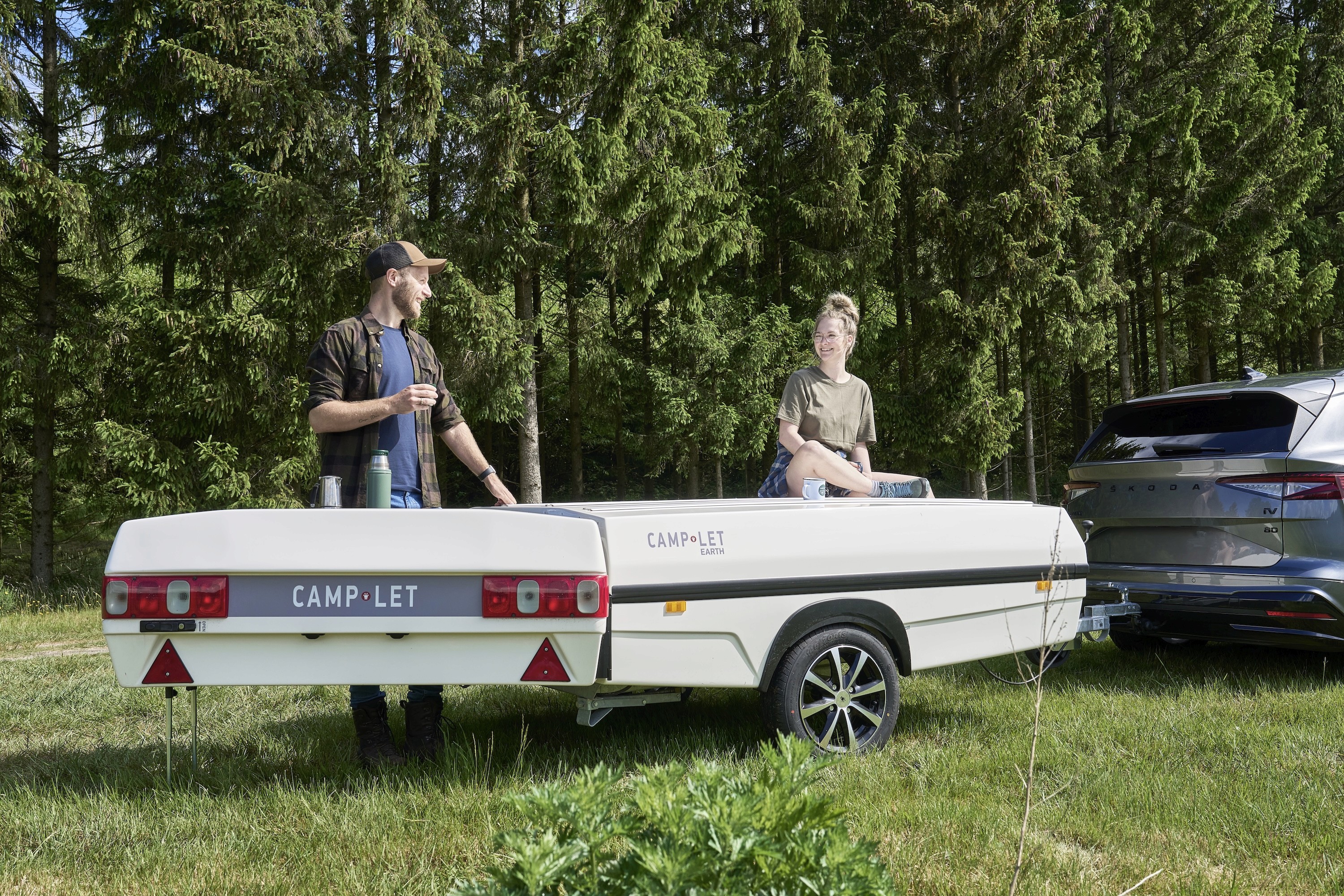
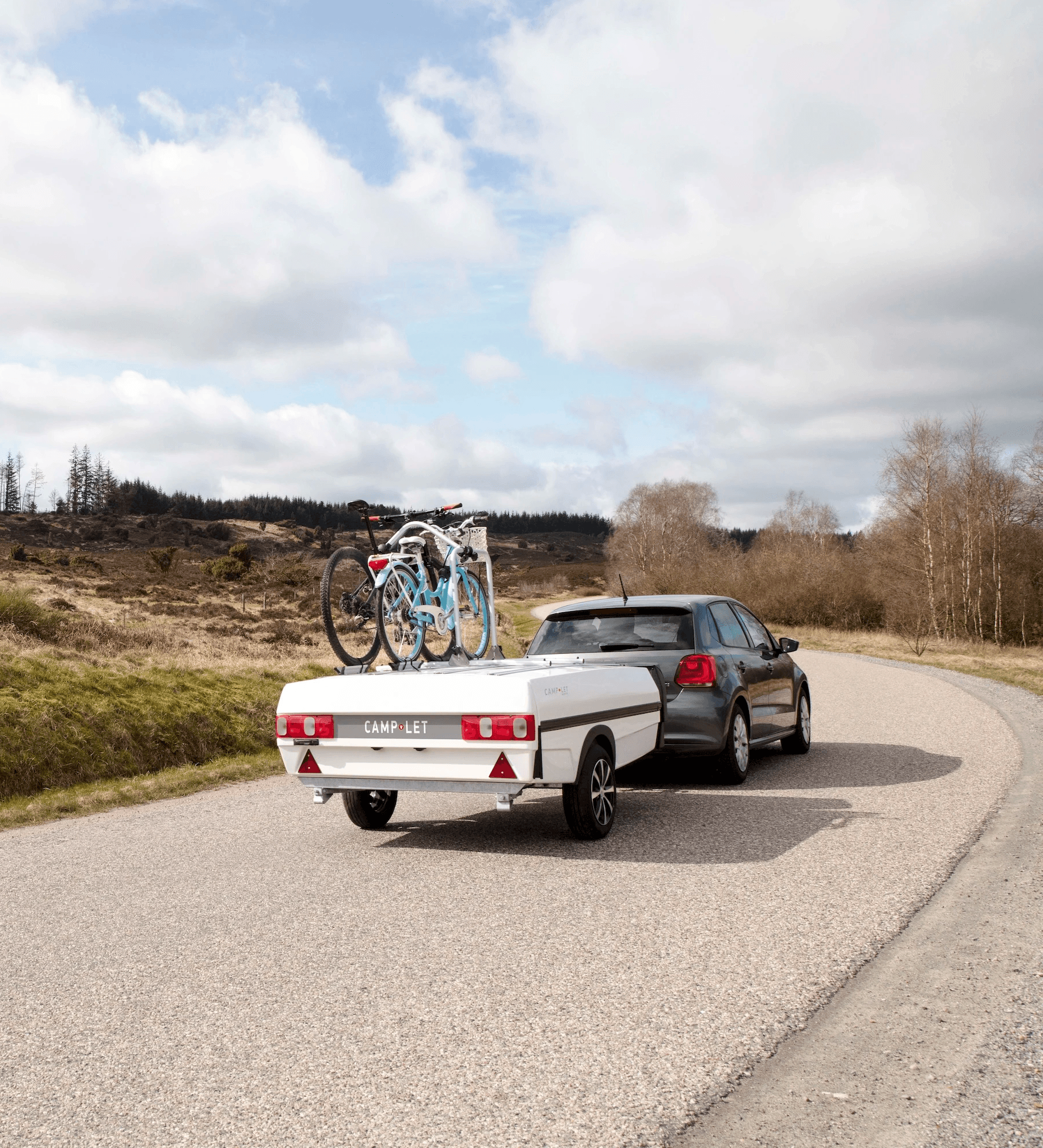
If you've spent time in the camping and overlanding world in the United States, you know the options: ground tents, rooftop tents, truck campers, pop-up trailers, teardrops, and full travel trailers. The trailer tent is none of those things. It's a category that has been popular in Europe for more than fifty years but has never been imported to the American market in any meaningful way. That's changing with Isabella’s Camp-let Earth. This guide explains what a trailer tent actually is, how it compares to the camping solutions you already know, and who it makes sense for. If you're considering Camp-let Earth, start here.
The Basic Concept
A trailer tent is a compact, purpose-built trailer that carries a full canvas tent system inside a hard-shell fiberglass body. When you arrive at camp, the trailer itself becomes the foundation of your shelter. The tent deploys out of and around the trailer, creating a living space that you sleep in, cook from and live out of. When it's time to leave, everything packs back into the same compact shell.
The trailer does not separate from the tent. It is not a storage unit that you unload at camp. Each side of the fiberglass shell become the sleeping cabins, elevated off the ground. The living area extends forward from the trailer as a full standing-height awning space. The trailer body, the sleeping cabins and the living area function as a single integrated system.
When closed for travel, Camp-let Earth measures approximately 127 inches long and 63 inches wide sitting just 37.5 inches tall. When fully set up, it opens to 234 inches long and 158 inches wide pro providing 194 ft.² of living and sleeping space with 7.4 feet of headroom at the center peak.
How It Differs from What You Know
Compared to a Ground Tent
A ground tent gets packed into a bag and pitched on whatever surface you find. A trailer tent travels on a dedicated chassis and deployed from a fixed system. Set up with camp Earth takes 15 to 20 minutes and follows the defined sequence. You are not sorting out where the polls go each time. The sleeping surface is elevated on the trailer bed, off the ground and away from moisture, insects, and cold. The canvas is Isa Krill acrylic, not nylon or polyester, which means it breeze differently, handles weather differently, and is built to last for decades rather than seasons.
Compared to a Rooftop Tent
A rooftop tent lives on your vehicle's roof rack. When you're camped, your vehicle is committed. You can't drive to get firewood, explore a side road, or move the vehicle without packing the tent down first. Camp-let travels behind your vehicle, unhitches at camp and stays put while you drive freely. It also provides significantly more space. A typical two-person rooftop tent gives you a sleeping platform. Camp-let gives you two sleeping cabins, a full standing-height living area and optional kitchen and shade additions. All self contained on a trailer that weighs 595 pounds.
Compared to a Pop-Up Trailer
American pop-up campers use a hard frame that cranks up to reveal canvas sleeping ends. The mechanical lift system, wheel wells and interior furniture add weight quickly. A standard pop-up camper runs 1,500 to 2,500 pounds or more. Camp-let at 595 pounds unladen can be towed by vehicles that pop-ups cannot, including crossovers, sedans and electric vehicles. The comparison is not about one being better. It's about the tow vehicle you have and the kind of camping you want to do.
What You Actually Get at Camp
When Camp-let is fully set up, you have the following as standard.
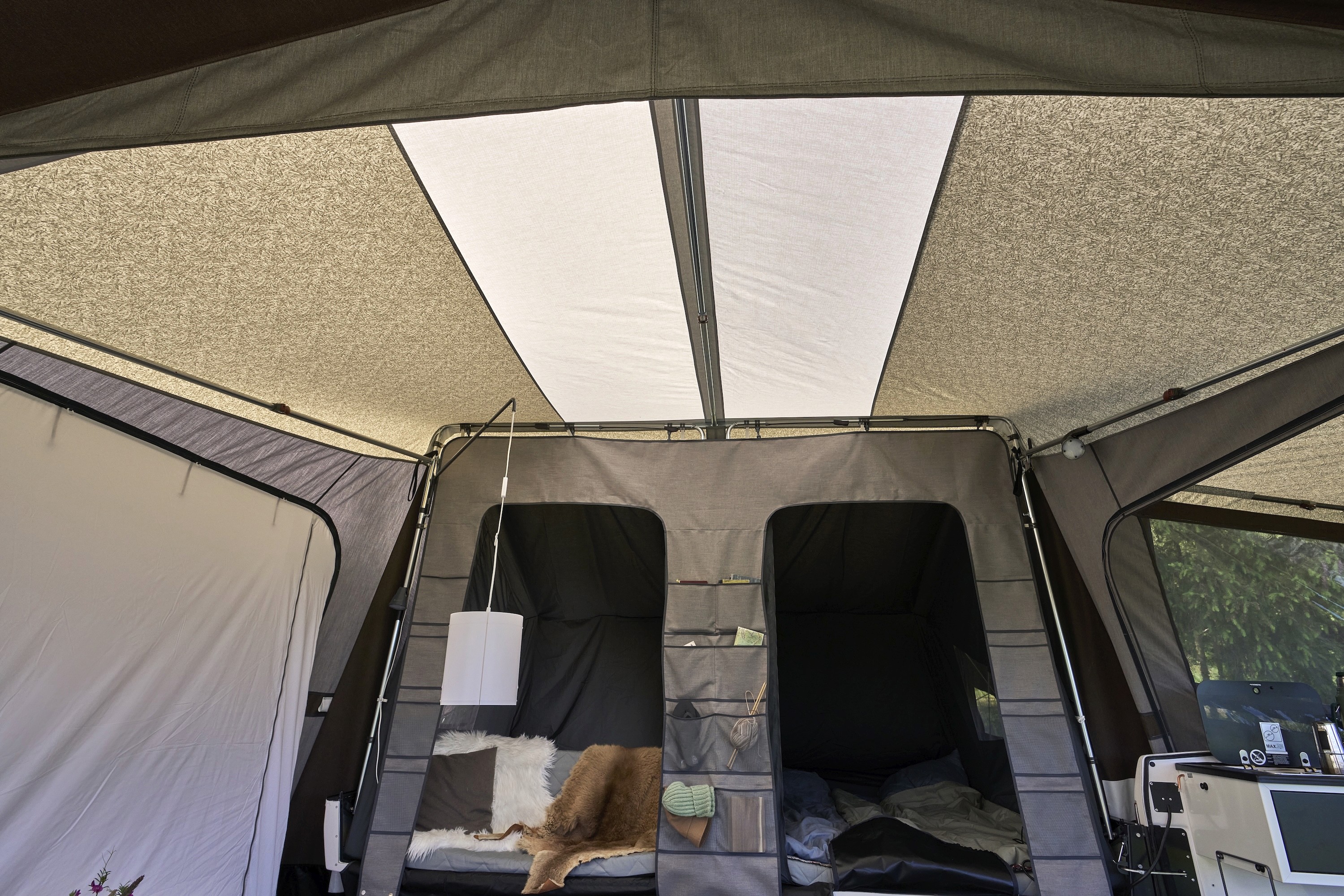
Two sleeping cabins, each housing two people on cold foam mattresses elevated on the trailer bed. The sleeping cabins are constructed in dark fabric to block morning light. Each cabin has ventilation openings with integrated mosquito nets and external flaps that can remain open in rain. A storage pelmet with pockets sits in front of the sleeping cabins. Under the sleeping cabins, a dry storage liner is installed after setting up Camp-let. Serving as both additional storage and barrier to close off the bottom of the Camp-let to your living area.
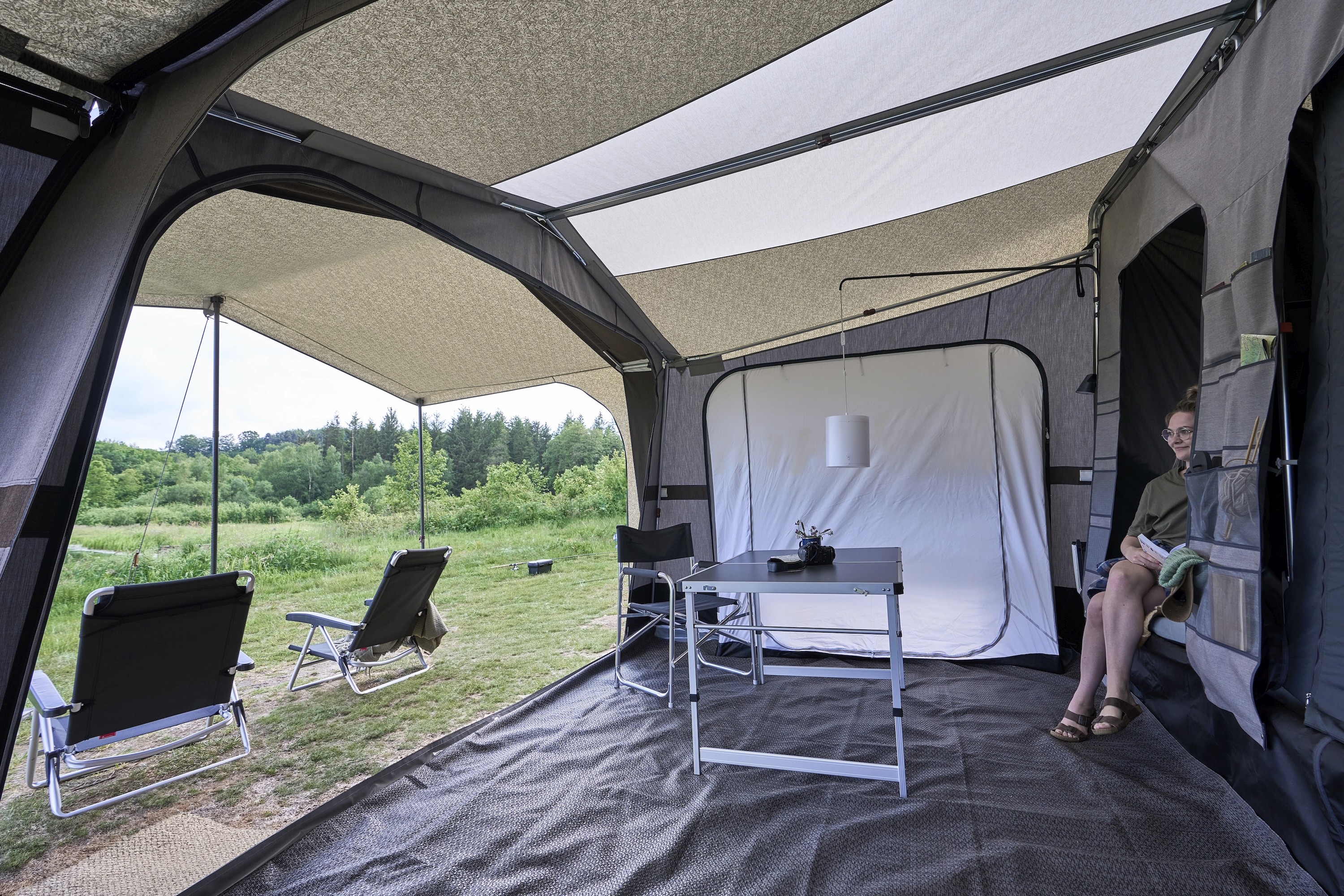
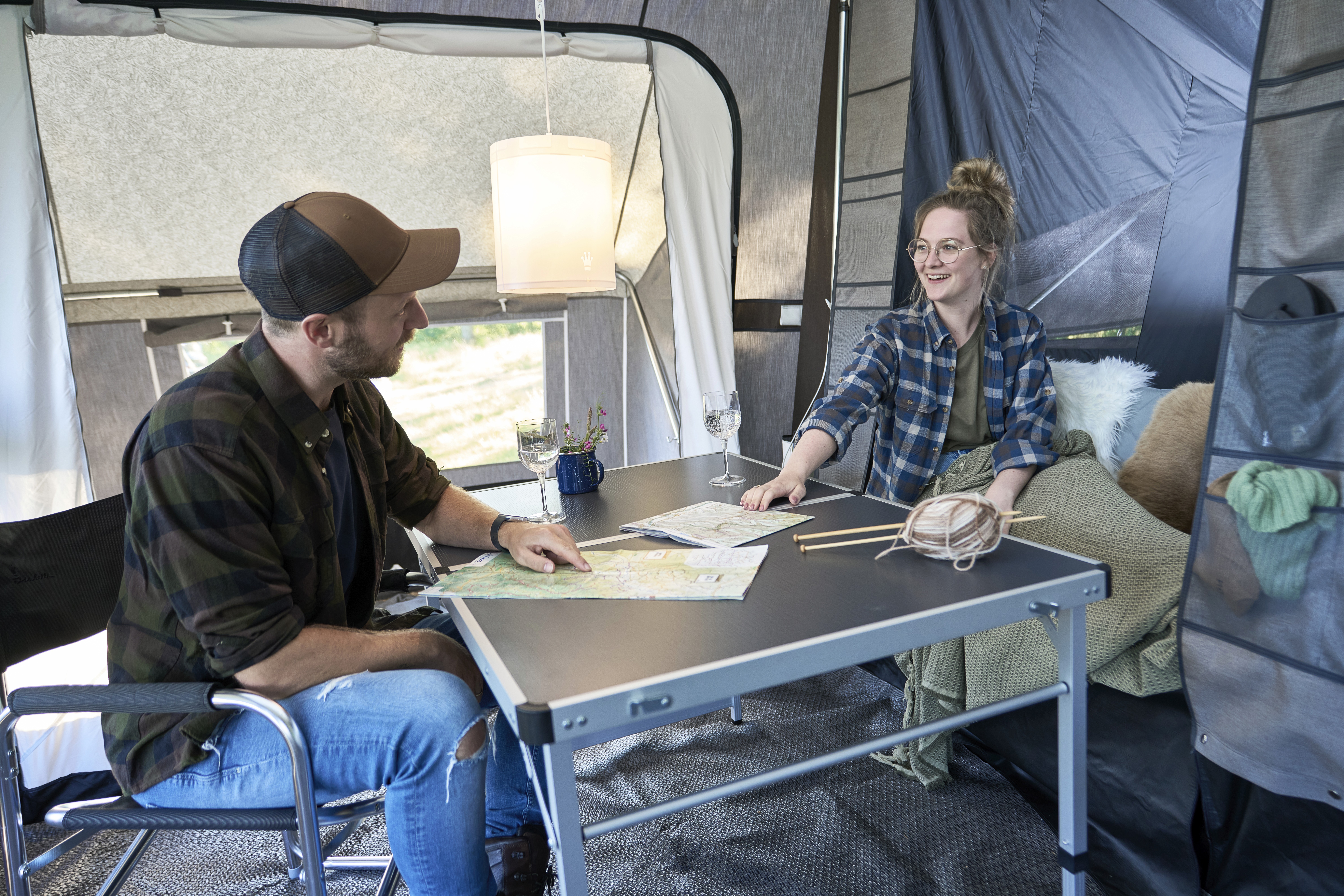
The living area extends forward from the trailer as a full standing-height awning space. Two light panels in the ceiling allow natural light into the space. The center peak heigh is 7.4 feet. The front panel rolls aside to create a large open entrance. A veranda pole is included so one side can be propped open as a porch. The entire front and sides can be unzipped and removed, converting the structure into an open shade canopy.
The kitchen is an add-on. Camp-let Earth is designed to be configured to your preferences, and kitchen packages are available as add-ons. The tailgate of the trailer swings open to reveal the kitchen, and on the Earth can be opened 180 degrees so your kitchen is outside of your living space.
The roof of the trailer body carries up to 176 pounds of gear. The ideal place to mount whatever gets you outside.
Why This Category Exists
In Europe, trailer tents developed as a solution for families who wanted more than a tent could provide but didn't want the size, complexity or cost of a caravan. The category has been active since the late 1960s. Camp-let has been manufacturing trailer tents in Denmark since 1969 and is now part of the Isabella family, which brings 70 years of awning and canvas expertise to the product.
The design priorities that came out of European camping culture translate directly to American use cases. Compact travel footprint. Low tow weight. Generous living space at camp. Materials designed to last for decades. The ability to leave your basecamp set up and drive your vehicle independently.
That last point deserves specific attention. When you park a rooftop tent, your vehicle is part of the shelter. You don't separate. With Camp-let Earth, you unhitch at camp and your tow vehicle is free. You can drive for supplies, explore nearby trails, run into town, or simply keep your basecamp intact while you move. This is the practical advantage that defines the category.
Who It Is and Isn't For
Camp-let Earth is designed for campers who prioritize a genuine living space at camp over minimalism on the road. The setup sequence takes 15 to 20 minutes and involves specific steps. It rewards people who camp regularly and build familiarity with the system. The first setup takes longer. By the fifth trip, the process becomes straightforward.
It makes the most sense for couples and families who want sleeping accommodation for two to four people, want standing-height space to live in, and want the flexibility to unhitch and drive freely once camp is established. It works well for weekend trips and extended travel. It is not designed for people who want to arrive and be sleeping in five minutes.
At 595 pounds unladen, Camp-let Earth can be towed by vehicles that most people already own. Any vehicle with a standard hitch and a tow rating of 1,000 pounds or more is a candidate. Crossovers, sedans, SUVs, trucks, and electric vehicles with towing capability all qualify. You do not need a heavy-duty truck.
People who prefer ultra-lightweight gear, who prioritize fast overnight stops over camp living, or who want a fully self-contained unit with a hard-wall bedroom will find other products better suited to their needs. Camp-let Earth is not trying to serve everyone. It serves campers who want a premium canvas basecamp that can travel behind a car.
The Camp-let Earth Specifically
Camp-let Earth was introduced in 2024 and won Best Trailer Tent at the 2025 Out & About Camping Awards in the UK, where judges recognized its modular design and ability to be customized to different camping styles.
The modular design means Camp-let Earth can expand. As standard, it sleeps four in two cabins. With annexes added, sleeping capacity reaches eight. A sun tent, side tent, annex and front awning are all available as add-ons that zip directly onto the main structure. You can start with the base configuration and add to it as you understand how you actually use the product.
The canvas is Isacryl, the same fiber-dyed acrylic fabric Isabella has used in awnings for decades. It retains color in UV-intensive climates, breathes to manage condensation, and repels water through high-density impregnation. It is not a seasonal material. It is built to hold up to years of regular use.
The trailer body is blown fiberglass with steel hardware and aluminum fittings throughout. The chassis is purpose-built for the product. These are not materials chosen for low cost. They're chosen for the kind of longevity that makes a product worth maintaining over time.
All Camp-let trailers are built by hand at our factory in Arnum, Denmark.
Next Steps
If Camp-let Earth sounds like a fit for how you camp, the rest of the IsaGuides Tent Trailer section covers setup, towing requirements, honest comparisons with rooftop tents, and what long-term owners discover after the first season. Start with the setup guide if you want to understand what the process actually involves before making a decision.
If you're still deciding whether Camp-let Earth or a rooftop tent makes more sense for your situation, the comparison guide addresses that question directly without a predetermined answer.
Please visit our Contact Page to reach out if you would like to speak to a member of Isabella to assist with any additional questions you may have.