A pop-up camper and a tent trailer are the same idea built two different ways. Both tow a canvas shelter behind the car and open it at camp. The difference is what carries the canvas, and that decides almost everything else.
A pop-up camper and a tent trailer are the same idea built two different ways. Both tow a canvas shelter behind the car and open it at camp. The difference is what carries the canvas, and that decides almost everything else: how much the trailer weighs, what can tow it, where the living space is, and what comes built in.
This comparison uses the Forest River Rockwood Freedom and Flagstaff MAC series as the pop-up reference. They are the tent campers still in regular production from a major manufacturer, they are twins with identical weights and dimensions model for model, and their 2026 specifications are published. Jayco stopped building fold-downs in 2019. Coachmen’s Clipper line is dealer stock only. If you are shopping pop-ups today, you are mostly shopping Forest River.
At a Glance
Camp-let Earth | Rockwood Freedom / Flagstaff MAC (2026) | |
|---|---|---|
Dry weight | 595 lb (270 kg) | 1,763 to 3,032 lb (800 to 1,375 kg) |
Hitch weight | 80 to 120 lb (36 to 54 kg) | 250 to 400 lb (113 to 181 kg) |
Trailer brakes | Not required. Tows unbraked. | Electric brakes standard. Brake controller required. |
Minimum tow rating | 1,000 lb (454 kg) | Varies by model. Many crossovers do not qualify. |
Closed length | 10 ft 7 in (3.23 m) | 11 ft 10 in to 19 ft 3 in (3.61 to 5.87 m) |
Closed height | 3 ft 1.5 in (0.95 m) | 5 ft to 6 ft 4 in (1.52 to 1.93 m) |
Open length | 18 ft 10.5 in (5.75 m) | 17 ft 2 in to 25 ft 9 in (5.23 to 7.85 m) |
Sleeps | 4 standard, 6 with Annex | 5 to 6 |
Standing height | 7.4 ft (2.3 m) | Yes |
Living space | 194 sq ft (18 m²) canvas room in front of the trailer | Inside the box, between the bunk ends |
Kitchen | Optional module | Two-burner range or outside griddle, sink |
Furnace, fridge, air conditioning | Not built in | 20,000 BTU furnace, 12V fridge with solar, 15K A/C standard on Freedom models |
Fresh water | Not built in | Onboard tank and pump |
Tent material | Isacryl acrylic, 295 g/m² | Sectioned vinyl, 5-year warranty |
Setup | 15 to 20 minutes, 11 stages | Power roof lift, slide-out bunks. No published time. |
Hard-sided-only campgrounds | Not permitted | Not permitted |
Price | From $13,695 | MSRP $19,674 to $27,353. Dealer pricing commonly $14,795 to $21,997. |
What Both Have in Common
Both are soft-sided. Both give you standing height at camp and canvas sleeping areas off the ground. Both fold down to a low profile for the drive. Both are excluded from campgrounds that require hard-sided units, which in grizzly country can mean the campground you most wanted. Both are towed by a car you probably already own, within limits that differ a great deal between the two.
A person who likes the pop-up camper idea, a real bed and a real roof without the bulk of a travel trailer, will like what a tent trailer does. The question is which set of tradeoffs fits how you camp.
The Structural Difference
A pop-up camper is a hard box on wheels. The roof is a hard panel that cranks or powers up on four lift posts. Two canvas bunk ends slide out from either end of the box. You live inside the box, between the bunks, with the galley, dinette, and any built-in systems around you. The canvas is the walls of the bunk ends and the band between the box and the raised roof.
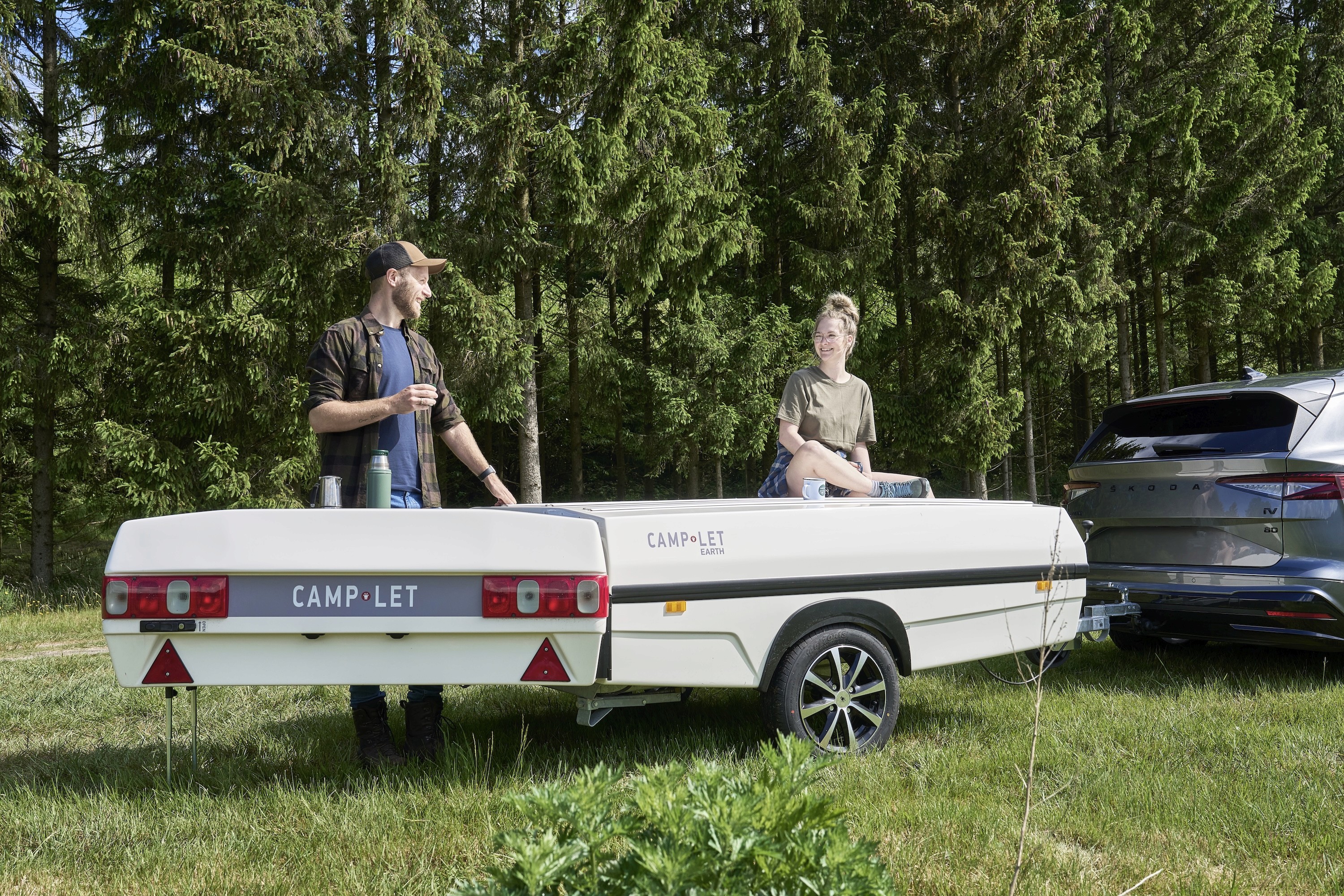
Camp-let Earth is a fiberglass shell that becomes the bedrooms. When it opens, each side of the shell is a raised sleeping cabin. The living room is a full-height canvas room that deploys forward of the trailer, 194 sq ft (18 m²) of floor including the cabins. There is no box to live inside. The trailer body is where you sleep and where things are stored; the space in front of it is where you live.
That is the whole comparison in two paragraphs. Everything below follows from it.
Weight: Not a Close Comparison
Camp-let Earth weighs 595 lb (270 kg) dry and tows unbraked. The lightest Rockwood Freedom, the 1640FT, weighs 1,763 lb (800 kg) dry with 250 lb (113 kg) on the hitch, and electric brakes are standard on every Forest River tent camper, which means a brake controller in the tow vehicle.
The practical gap is bigger than the numbers suggest. A Camp-let Earth needs a 1,000 lb (454 kg) tow rating, which most crossovers, many sedans, and nearly every EV with a tow rating can supply. A Freedom 1640FT is 1,763 lb before anything goes in it, and needs a vehicle rated well above that, with a 7-pin connector and a brake controller. A Subaru Forester or Honda CR-V tows a Camp-let without comment. Neither is rated for a 1640FT.
If your tow vehicle is already a truck or a full-size SUV, this section does not apply to you and the pop-up’s weight is not a problem. If you are hoping not to buy a bigger vehicle, it is the deciding factor.
Built-In Systems: Where Pop-Ups Have the Edge
A Rockwood Freedom arrives with a two-burner range or outside griddle, a sink, an onboard fresh water tank and pump, a 20,000 BTU furnace, a 12V refrigerator with a roof solar panel, a 15,000 BTU air conditioner under the bunk, a 30 amp shore cord, and a power roof lift. Two of the larger models add a shower and toilet. These are standard, not options, and they are a large part of why the trailer weighs what it weighs.
Camp-let Earth has none of this built in. The kitchen is a module you add or leave out. Water comes in containers. Heat is a portable heater if you want one. Power is whatever you bring. This is a deliberate design choice and it is the honest reason the trailer weighs 595 lb. It is also the honest reason a family who wants a furnace running on a cold night and a fridge that was cold when they left home will be happier in a pop-up.
The right way to think about it: a pop-up packages the systems into the trailer. A Camp-let packages the shelter into the trailer and leaves the systems to you. One is not more capable than the other. They put the weight in different places.
Living Space: Inside the Box or In Front of It
In a pop-up, the living area is the interior of the box: a dinette that converts to a bed, the galley, a walkway between the two bunk ends. It is weatherproof in the sense that the roof is hard, and it is compact. Four people can be inside. Four people cannot easily move around inside.
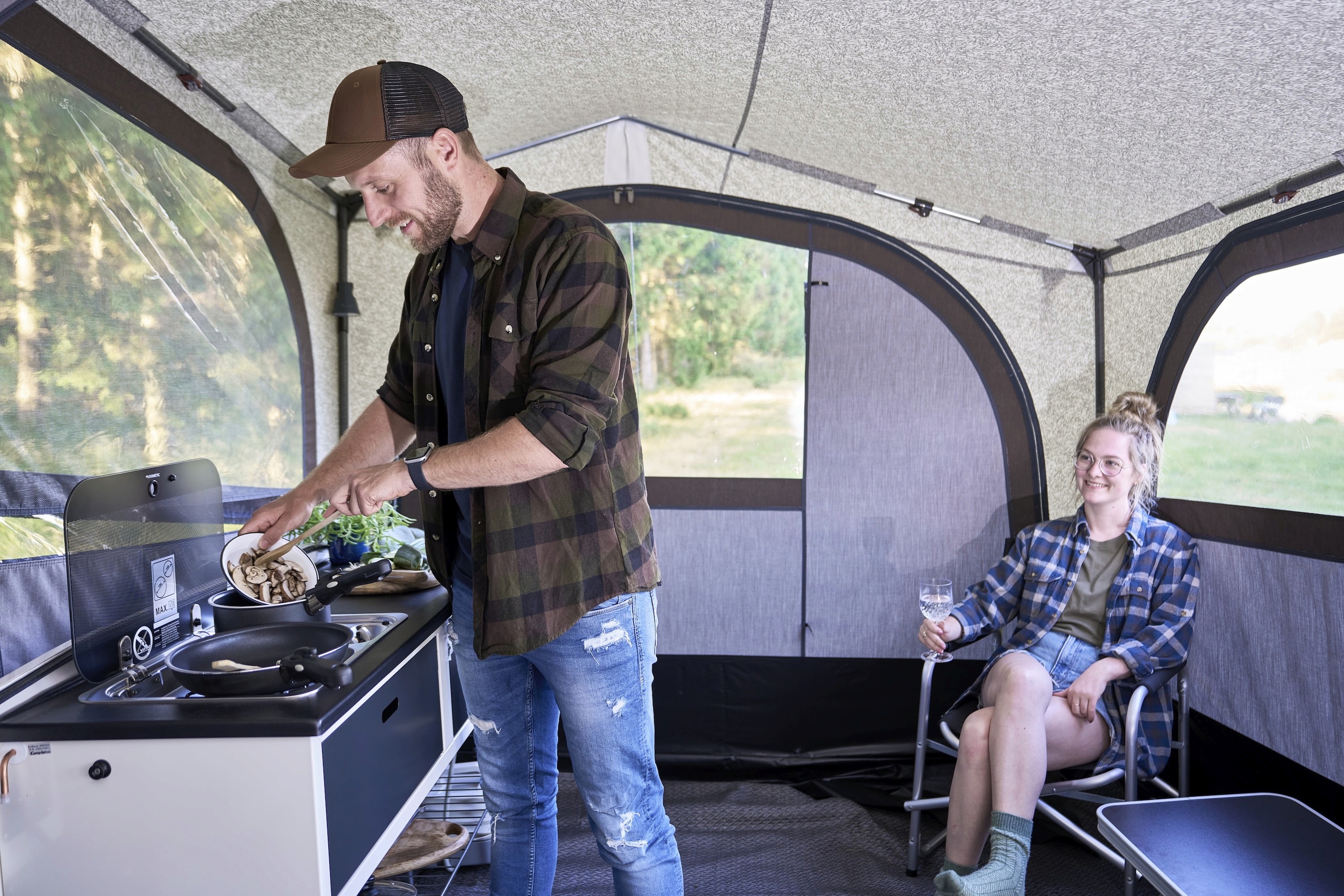
In a Camp-let, the living area is a canvas room in front of the trailer with a 7.4 ft (2.3 m) peak and two light panels in the ceiling. It is where you eat, cook if you have the kitchen module, and sit when it rains. The sleeping cabins are off to the sides and zip closed, so a person sleeping and a person reading are in different rooms. Side tents, a sun canopy, and an annex extend the footprint further.
The honest summary: the pop-up gives you a small, fully equipped interior. The Camp-let gives you a large, lightly equipped one. Families who camp in place for several days tend to value the room. Couples who move every night tend to value the equipment.
Canvas: Vinyl vs. Acrylic
Forest River tent campers use a sectioned vinyl tent material carrying a five-year warranty. Vinyl is tough, holds color, and sheds water because it is a coating. It does not breathe, so condensation forms on the inside on cool mornings, and it ages at the folds rather than in the color.
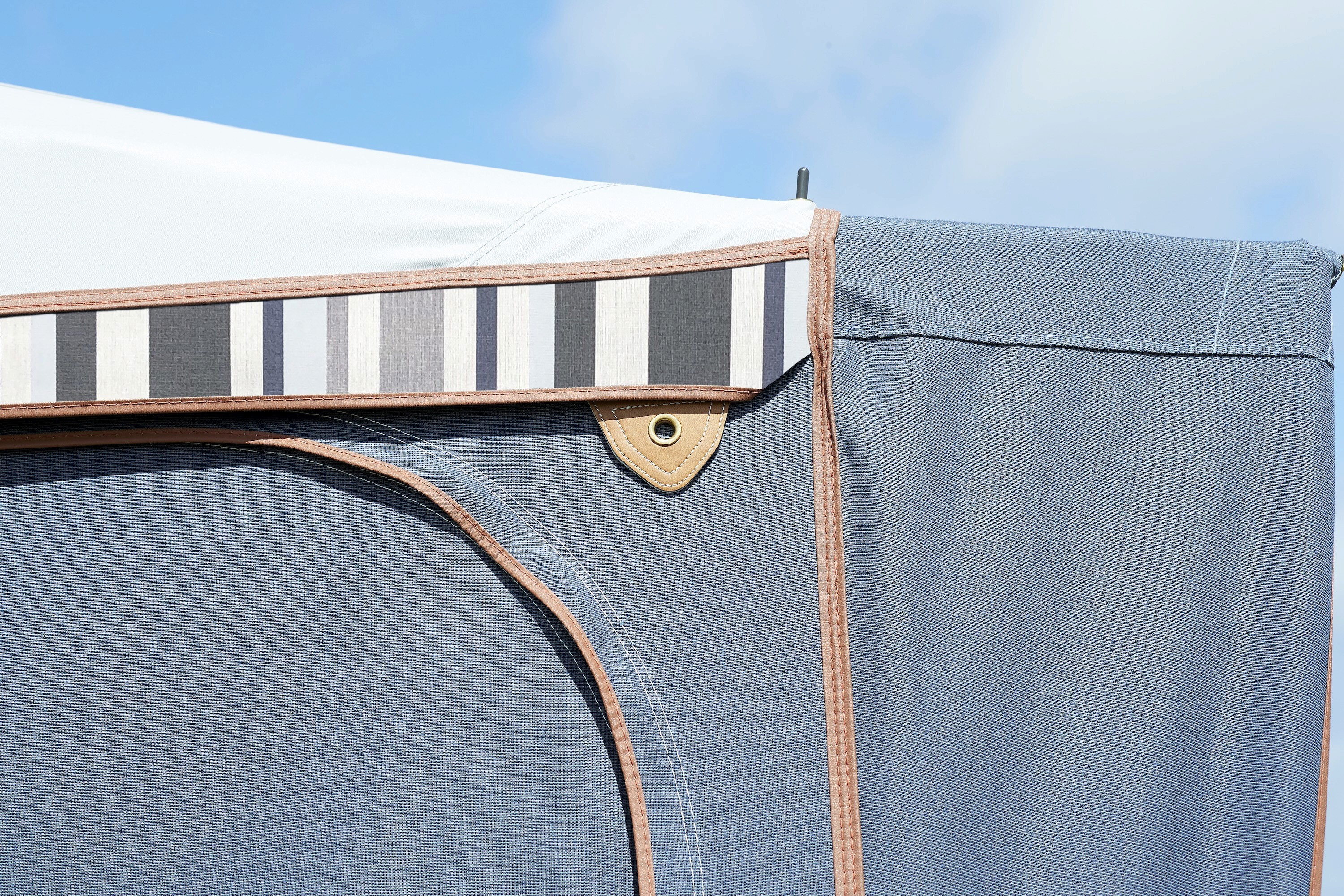
Camp-let Earth uses Isacryl, a 295 g/m² acrylic canvas with the color dyed into the fiber rather than coated on. It breathes, so condensation is lower. It sheds water through a proofing that can be renewed rather than a coating that cannot. It is the same material Isabella has used on awnings for decades, and the care routine is covered in the Isacryl care guide.
Neither material is wrong. Vinyl is cheaper and needs no re-proofing. Acrylic is more comfortable to sleep under and lasts longer with a small amount of attention.
Setup: Crank vs. Sequence
A pop-up sets up in a handful of large steps: unhitch and stabilize, raise the roof on the power lift, slide out each bunk and fit its support bars, swing the door panel into place, connect the canvas. Forest River does not publish a setup time. In practice it is quick, and most of the work is in leveling and the bunk supports.
Camp-let Earth sets up in an 11-stage sequence that takes 15 to 20 minutes once you know it and 45 to 60 minutes the first time. There are more steps because there is more structure to raise: the living room is built from poles and tension rather than lifted from a box. The full sequence is in the setup guide. Most owners are fluent by the fourth or fifth trip.
If you want the shortest possible time from arrival to sitting down, the pop-up is quicker. If you are staying three nights, the difference is a rounding error.
Towing and Storage at Home
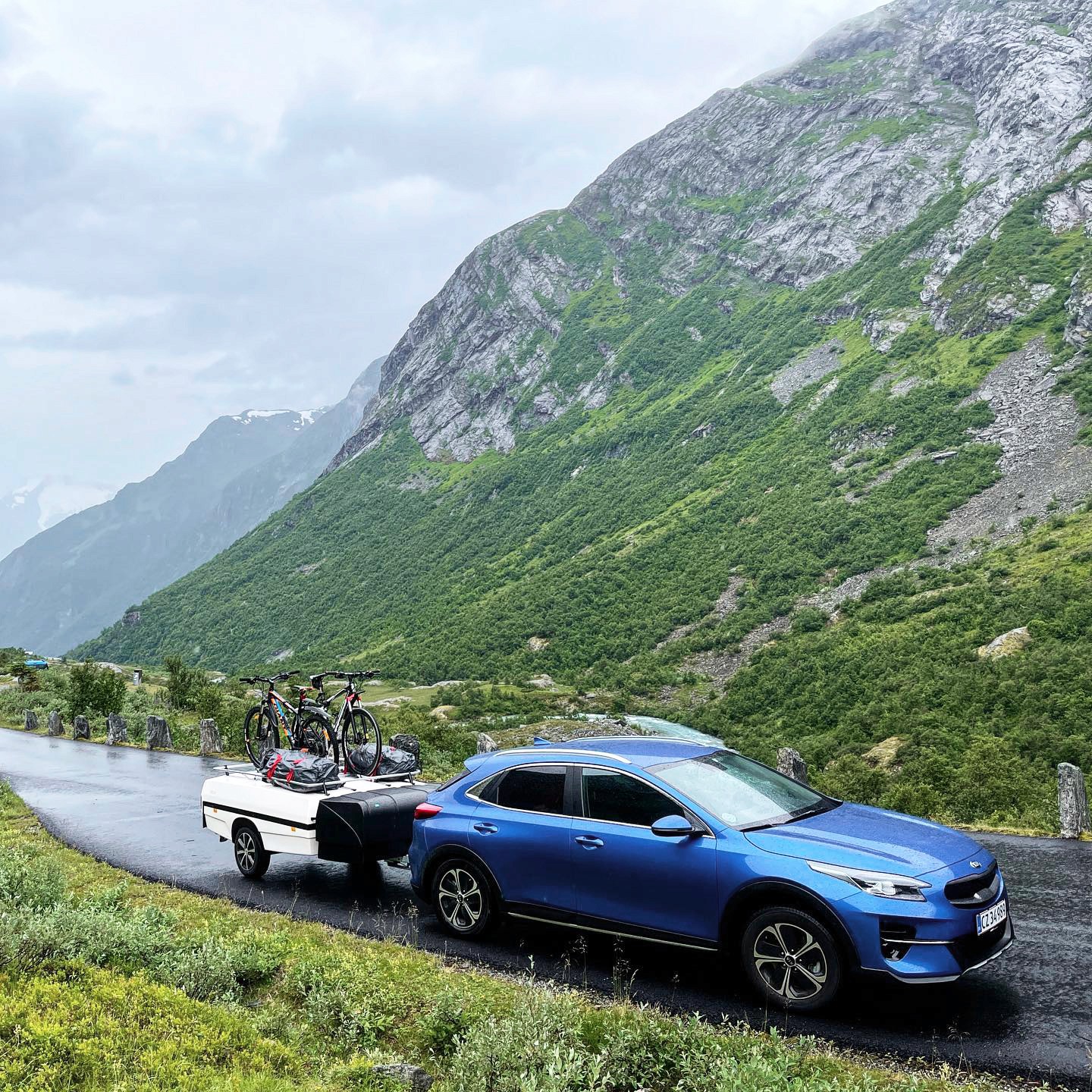
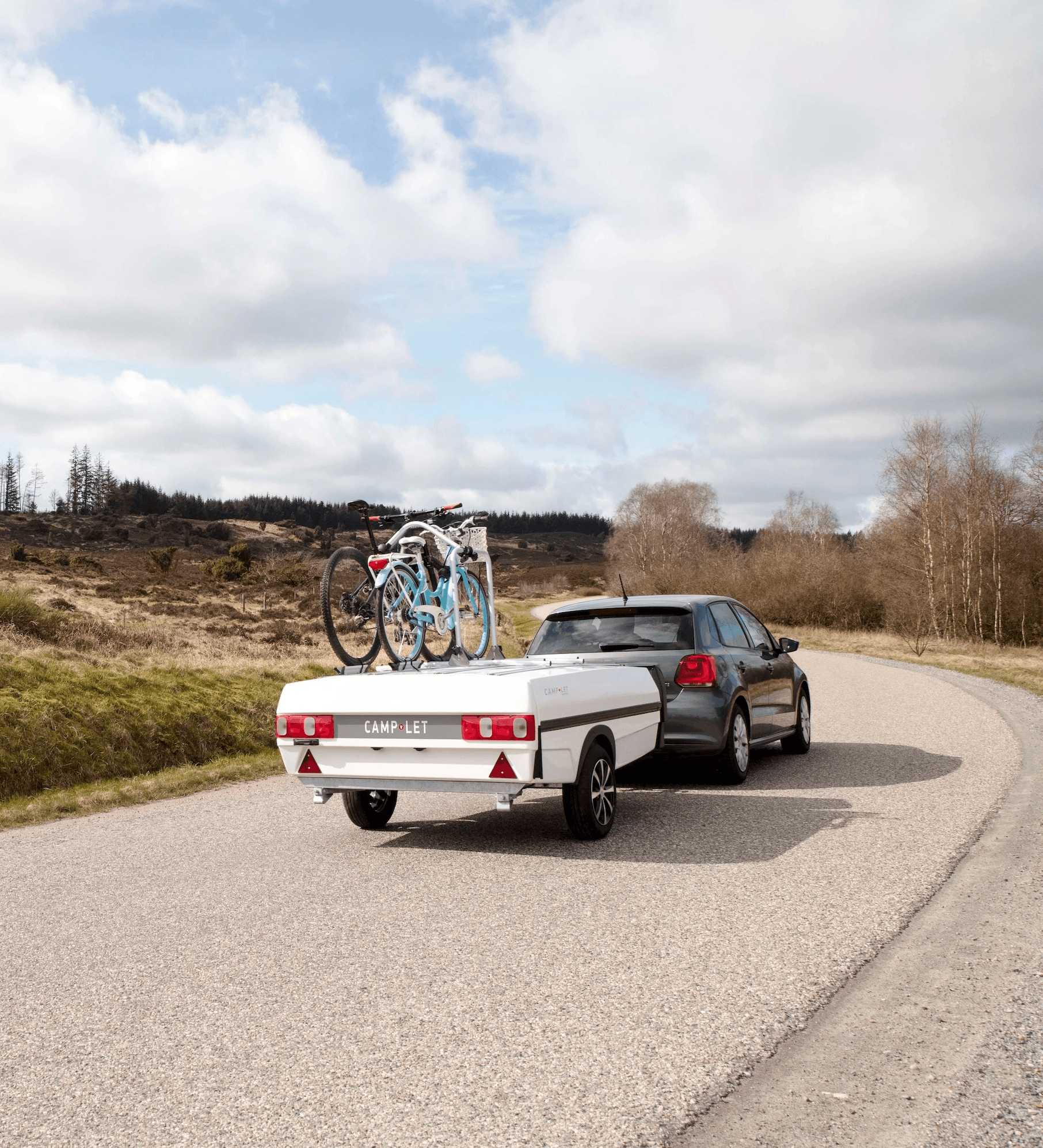
On the road, Camp-let Earth is 10 ft 7 in (3.23 m) long and 3 ft 1.5 in (0.95 m) tall, narrower than most cars. You see over it in the mirror. A Rockwood Freedom closed is 11 ft 10 in to 19 ft 3 in (3.61 to 5.87 m) long and 5 ft to 6 ft 4 in (1.52 to 1.93 m) tall. It tows like a small travel trailer because that is roughly what it is on the road.
At home, the difference is where it lives. A Camp-let fits in a single garage bay with room to walk around it, under a carport, or in a corner of a shed. A pop-up fits in a garage if the garage is deep enough and the door tall enough, and otherwise lives in the driveway or a storage lot. Storage lot fees are a real cost over the life of the trailer and are easy to forget at the dealership.
Cost: Looking at the Full Picture
Camp-let Earth is $13,695 before freight, which runs $599 to $1,999 depending on region, and before the optional kitchen module. A 2026 Rockwood Freedom lists at $19,674 to $27,353 MSRP, with dealer pricing commonly between $14,795 and $21,997. At dealer pricing, a small Freedom and a Camp-let Earth with freight land within a few thousand dollars of each other.
What that price buys is different. The pop-up includes a furnace, a fridge, air conditioning, and plumbing. The Camp-let does not. On sticker, the pop-up is more trailer for the money, and that should be said plainly.
The costs that follow are where it turns. The pop-up may require a tow vehicle you do not have, a brake controller installation, and a storage space you have to rent. The Camp-let is towed by the car in the driveway, needs no controller, and stores in the garage. Over several seasons, the trailer with the lower sticker is often not the one that cost less.
If You Need Hard Walls, It Is Neither
Some campgrounds in bear country allow hard-sided units only. The National Park Service is specific: at Yellowstone’s Fishing Bridge, no tents or tent campers; at Glacier’s St. Mary campground under restriction, hard-sided pop-ups are allowed and soft-sided ones are not. A Rockwood Freedom and a Camp-let Earth are both soft-sided. Neither gets in.
If that rule applies to the places you camp, the honest answer is a hard-sided A-frame: an Aliner, 1,190 to 2,600 lb (540 to 1,180 kg) dry with fiberglass walls and a 30-second setup, or Forest River’s own Rockwood and Flagstaff Hard Side models at roughly 2,200 to 2,700 lb (1,000 to 1,225 kg). MSRPs start in the low twenty thousands and run far higher, they weigh more, and they give up the canvas living room entirely. They are the right tool for that rule.
Who Should Buy Which
A pop-up camper is the right choice if:
You already own a truck or full-size SUV with a brake controller, and trailer weight is not a constraint.
You want a furnace, a fridge, air conditioning, and running water built in and ready when you arrive.
You move campsites often and value the shortest setup over the largest living space.
You have a driveway or storage lot and are fine with the trailer living outside.
Camp-let Earth is the right choice if:
Your tow vehicle is a crossover, a small SUV, a sedan with a hitch, or an EV, and you do not want to replace it.
You camp in place for several days and want a living room you can stand in, with the sleeping cabins separate from it.
You would rather bring your own systems and keep the trailer at 595 lb than carry built-in ones at 1,800 lb and up.
You want the trailer in the garage between trips, out of the weather and off the storage lot invoice.
The Right Answer Depends on How You Camp
The pop-up camper is the more complete trailer on the lot. The tent trailer is the more complete trailer behind the car you own. Which of those matters more is a question about your driveway, not about the trailers. If you are still deciding, the towing guide covers exactly what your vehicle can pull, and the long-term ownership guide covers what the first season with a Camp-let actually involves.